Ride Like a Pro: The Secret Roads Where Girona’s Cycling Legends Train
Discover the secret roads around Girona where pro cyclists train, plus insider tips to ride like a legend on these iconic routes.
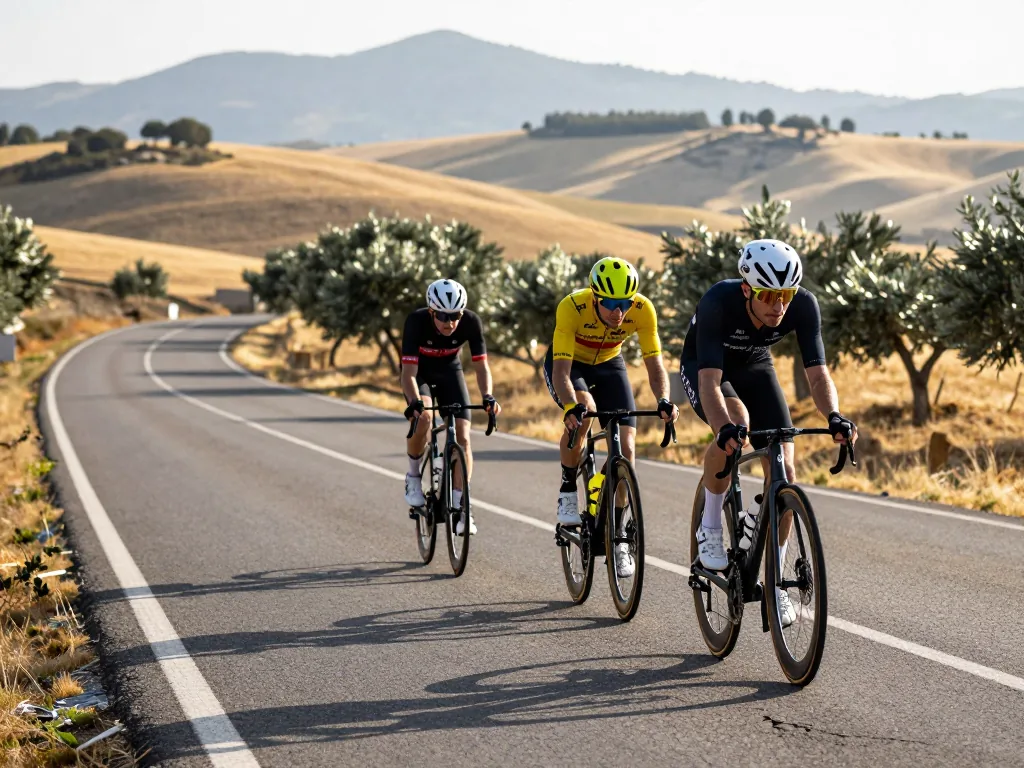
Deep in the Catalan Pyrenees’ foothills, asphalt ribbons through cork oak forests and medieval stone villages. Every morning, before the sun crests the peaks, a quiet revolution unfolds. This is where the world’s best train—Tour de France champions and Olympic medalists hammer their legs into legend on roads most tourists never see. This guide leaves the crowded coast behind. It unlocks the exact climbs, descents, and hidden loops that turn Girona’s pros into beasts. By the end, you’ll know where they ride—and how to ride those secret stretches with the same flow, efficiency, and quiet confidence.
Why Girona Is a Pro Cycling Mecca
The Geography and Climate Advantage
Girona sits roughly 100 kilometers north of Barcelona, but the cycling conditions feel like another country entirely. The city enjoys a microclimate with mild winters and dry roads even when the rest of Catalonia is drenched. That’s the first reason pros flock here: from October through May, you can train outdoors in relative comfort, with temperatures rarely dropping below 8°C and rain often skirting the surrounding hills. The terrain is the second gift. Within a 30 to 60-minute ride from the city center, you get a complete menu of roads—rolling hills that mimic the Ardennes classics, steep ramps of 15% or more that rival Pyrenean climbs, and flat plains along the Ter River perfect for tempo work. The Costa Brava’s coastal undulations add a third dimension, letting riders mix sea-level endurance with mountain climbing in a single outing. No other European hub offers this density of variety in such a compact radius.
The Pro Culture and Infrastructure
Walk into any café near the Cathedral on a Tuesday morning, and you’ll see why this isn’t just a training ground but a lifestyle. Girona hosts a dense community of WorldTour professionals, retired legends, team mechanics, and physios. The infrastructure is built around them: bike shops stocking obscure spare parts, cafés serving espresso before 7 a.m., and group rides departing with military precision. But the real draw is quieter: the secondary roads marked GI-5xx and GI-6xx. These aren’t main tourist arteries. They are narrow, well-maintained asphalt ribbons connecting medieval villages like Madremanya, Peratallada, and Púbol with almost no car traffic. You can ride for three hours and see fewer than ten vehicles. The surface is smooth, the corners are predictable, and the gradients are honest. For a pro, that means uninterrupted interval sessions; for a serious amateur, it’s the closest you’ll get to riding like a paid athlete.
Best seasons: October–May for cool, dry training; June–September for early morning rides before the heat builds. Base yourself near the Old Town or the southern outskirts—both put you within 10 minutes of the key climbs. Bike setup: bring or rent a bike with compact gearing (34/32 or easier) because the steep ramps on the GI-5xx roads are unforgiving on a standard cassette.
The Iconic Rocacorba Climb
Route Details and Profile
For anyone who has watched a professional cycling race in Girona, the name Rocacorba is whispered with reverence and fear. This isn’t just another climb; it’s the region’s ultimate benchmark, where WorldTour riders sharpen their form and locals measure themselves against the sport’s elite. The ascent begins deceptively in the rolling countryside near Sant Martí de Llémena. From there, the road narrows and tilts upward for a relentless 12 to 13 kilometers. The average gradient hovers around a manageable 5–6%, but that statistic misleads. The climb is a study in rhythmic variation, with long, grinding sections that never quite let you recover. The real challenge, though, is saved for the final two kilometers. As the road corkscrews toward the summit, the tarmac kicks up savagely, with pitches regularly exceeding 10%. Your reward is the hermitage of Rocacorba, perched dramatically on a rocky outcrop, offering panoramic views over the Gavarres massif and the Mediterranean Sea in the distance.
How to Ride It Like a Pro
The most common mistake visiting riders make is attacking the first gentle slopes with too much enthusiasm. Pros treat this climb with far more respect. The golden rule: start steady, using the first four kilometers to find your rhythm and warm into the effort. After that, the road settles into its true character. Lock into a tempo that feels hard but sustainable—a pace you could theoretically hold for 20 to 30 minutes. Think of it as a long threshold effort, not an explosive surge. The true test begins with the final 2 km. When steep switchbacks appear in the distance, resist the urge to shift into your easiest gear and panic. Instead, stand on the pedals, keep your upper body relaxed, and use momentum from each corner’s inside to power through the apex. Save a little for the very last ramp; the road doesn’t flatten until you’re right at the hermitage door.
“Rocacorba is not about power; it’s about pacing. The pros do it as a threshold effort, not a sprint.” — A common sentiment among local coaches.
The key is to leave Rocacorba feeling like you could have done one more kilometer, not like you’ve emptied every reserve. That control, that measured aggression, is the true mark of riding like a pro.
Els Àngels: The Interval Climb
Short, Steep, and Repeatable
Just south of Girona, the road to the Santuari dels Àngels monastery rises out of the plain like a dare. Only 5 kilometers long, with an average gradient of 5–6%, that statistic hides the truth: the pitch kicks up to 9% in the middle, flattens teasingly, then ramps again. This isn’t a climb you settle into—it’s one you attack, recover from, and attack again. That’s why the pros love it. The descent is fast and flowing, with wide, sweeping bends that let you carry speed safely, perfect for repeatable efforts. On any given morning, WorldTour riders carve up and down, power meters ticking over, doing three to five laps with easy spins between each hard ascent. Els Àngels’ beauty lies in its predictability: every lap is identical, so you can measure splits precisely and push your threshold without guessing.
Structuring Your Workout
To train like the locals, start with a 20-minute warm-up on the flat, quiet lanes parallel to the climb—head toward the hamlet of Sant Gregori to get your legs spinning. Then hit the base and do 4 x 5-minute efforts at 95–105% of your functional threshold power (FTP). You should be breathing hard, unable to speak more than a single word, but not quite sprinting. Recover with 5 minutes of easy pedaling back down, shaking out your legs and resetting your breathing. On the third repeat, cumulative fatigue sets in—that’s where real adaptation happens. A word of caution: the road narrows in places, especially around the hairpins near the top, with occasional gravel from winter runoff. Brake before corners, not in them, and keep your weight low on the descent. After your final effort, cool down with 15 minutes of gentle riding back toward Girona, letting your heart rate drop below 120 bpm before hitting city traffic. For a longer session, add two more efforts at 90% FTP—but don’t overdo it. The goal is quality, not quantity, and the pros treat this climb with respect, saving their hardest work for days when legs feel truly fresh.
Coll de Medes: The Long Endurance Test
Forget the explosive, leg-breaking ramps that dominate highlight reels. The real work of a professional cyclist is often done on long, unglamorous drags that force you to hold a steady, uncomfortable power for twenty minutes or more. Coll de Medes is exactly that kind of road. This is the climb on the C-65 from Girona heading toward the coastal town of Sant Feliu de Guíxols, and it’s a staple for every WorldTour squad that bases itself in the region.
A 10 km Grind Toward the Coast
The climb begins almost imperceptibly as you leave the flatlands around Cassà de la Selva. Unlike the hairpin-laden ascents of the Pyrenees, Coll de Medes is a relentless, rolling drag that averages around 4-5% but never quite lets you settle. The road is wide, fast, and often buffeted by a breeze that seems to shift direction with every kilometer. For a pro, this is the perfect venue for tempo work or sweet-spot intervals—that painful zone between threshold and endurance where you build a massive aerobic engine without blowing your legs up. You’ll see riders sitting on the hoods, turning a big gear at a low cadence, deliberately avoiding the temptation to sprint. The gradient is just enough to demand respect but not enough to force you out of the saddle. It’s a test of patience and pacing, a bridge between the flat plains where the warm-up happens and the technical descent that follows over the crest.
Combining with a Coastal Loop
The true value of Coll de Medes reveals itself when you use it as the centerpiece of a longer, mixed-terrain day. The classic pro loop starts in Girona, heads out on the flat roads toward Llagostera, and then hits the base of the Medes climb after roughly 30 kilometers of easy spinning. Once over the top, you’re treated to a fast, sweeping descent into Sant Feliu de Guíxols, where the air smells of salt and the Mediterranean glitters ahead. From there, the route turns north along the coastal road toward S’Agaró and Platja d’Aro—a rolling, punchy stretch that keeps your heart rate honest.
The return leg is where the endurance part kicks in. Instead of retracing your steps, you cut inland on the flat, exposed roads of the Baix Empordà plain, passing through Calonge and La Bisbal d’Empordà. These roads are dead straight, often wind-exposed, and force you to grind a big gear back toward Girona. The result is a 90–120 km loop that includes a sustained climb, a technical descent, a coastal section with short power surges, and a long, flat return that tests your ability to hold aero position. It’s the perfect simulation of a race’s final hour, and why you’ll rarely see the local pros ride anything less.
Coll de Sant Grau: The Warm-Up Classic
A Gentle Introduction
Tucked away on the quiet road to Sant Gregori, Coll de Sant Grau doesn’t announce itself with switchbacks or steep ramps. It unfurls smoothly—a steady 4–5% gradient that lets you find your rhythm without threatening your legs. For local pros, this is the unofficial first chapter of a serious training day, where muscles are coaxed awake rather than shocked into action. The road is narrow but low-traffic, especially on weekday mornings, making it perfect for easy spinning, mobility work, or building aerobic endurance before the real efforts begin. Many Girona-based riders also use it as a standalone test: a 20-minute tempo push from base to summit that feels manageable yet leaves a satisfying burn in the quads. The summit itself is unremarkable—a few farmhouses, a wide shoulder, views back toward the Pyrenees—but that’s the point. It’s not about scenery; it’s about honest, uninterrupted pedaling.
Using It as a Loop Connector
Where Sant Grau truly shines is as a link in a longer chain. Its real value emerges when connected to its more famous neighbor, Rocacorba, via the quiet GI-5xx roads that snake through the countryside between Sant Gregori and the Rocacorba valley. These are the roads you’ll see in the Strava files of pros who winter here—empty asphalt, rolling hills, virtually no traffic until you hit Rocacorba’s base. A classic loop starts in Girona, rolls out to Sant Grau, descends the far side, then weaves through the hamlets of Canet d’Adri and Montcal before reaching the brutal, lung-busting ramps of Rocacorba’s final 3 kilometers. Done correctly, this creates a 60–80 km circuit covering both climbs without repeating a stretch of road. The pacing is its beauty: Sant Grau as warm-up, the connecting roads as a steady middle, Rocacorba as the punishing finale. For a stronger rider, this loop is a perfect threshold session—tempo on the warm-up, sustained power on the connectors, maximal efforts on the big climb. For a recreational cyclist, it’s a full day out with a coffee stop in Canet d’Adri. Either way, it’s a route that feels designed by someone who knows exactly what a cyclist’s body needs.
The Flat Plains of the Girona Basin
Endurance and Tempo Territory
If Rocacorba and Els Angels are where legends sharpen their knives, the plains are where they forge the blade. The roads fanning out from the sleepy hamlets of Fornells de la Selva, Cassà de la Selva, and Llagostera form the unsung foundation of every pro’s winter and spring campaign. The asphalt here is a ribbon of near-perfect smoothness across a pancake-flat basin that swallows traffic whole. On a Tuesday morning, you’ll share these lanes with little more than a tractor or a postal van. This is the domain of the long ride—the three-to-five-hour aerobic grind that builds the engine. Pros lock into Zone 2, spinning a steady cadence while their heart rate stays conversational, or execute brutal tempo blocks: 20 minutes at threshold, five minutes easy, repeated until the legs hum. With no elevation change, it’s brutally honest—there’s no descent to hide on, no climb to surge over. Just you, the wind, and the relentless pursuit of a steady power number.
Navigating the Grid
The basin’s beauty is its brutalist simplicity. The GI-5xx and GI-6xx regional roads form a near-perfect grid, a cartographer’s dream that lets you build any loop from 20 to 60 kilometers without repeating a stretch. Stitch together a clockwise square out of Cassà, drop south toward Llagostera, then head west on a quiet GI-664 before turning north. Signage is minimal—often just a faded yellow post—so a cycling computer with a loaded map is non-negotiable. But don’t be intimidated; the grid is intuitive. Once you memorize the cardinal directions, you’ll string together routes with the confidence of a local. The wind, however, is the real navigation tool. Pros check the forecast and plan the outbound leg into the headwind, saving the tailwind for the final hour home.
- Best for: Zone 2 endurance, tempo intervals, and fast group rides
- Watch for: Farm machinery at dawn and dusk—those tractors pull wide trailers and move slower than you think
- Fuel stops: Small village bars in Cassà and Llagostera serve strong espresso and simple bocadillos, but hours are erratic; carry your own nutrition and at least two bottles, as fountains are rare
Coastal Routes: Palamós to Begur
Rolling Terrain with Ocean Views
For riders after flow rather than suffering, the GI-652 and GI-653 linking Palamós to Begur serve as the unofficial recovery playground of Girona’s pros. These two-lane ribbons hug the Costa Brava’s granite cliffs, rising and falling in a rhythm that never punishes but always keeps you honest. The hills are short—often 200 to 500 meters at 4–6%—yet they arrive in relentless waves, forcing you to stay on top of the gear. What sets this loop apart is the light: the Mediterranean glitters on your right for nearly the entire route, while a salt-and-pine scent makes even a steady tempo ride feel like a holiday. Locals treat it as an active recovery day, spinning 80–90 rpm in a small chainring, but don’t be fooled—the constant undulation still racks up 800–1,000 meters of climbing over a modest 60 km. The asphalt is generally smooth, with wide shoulders near Palamós, then narrowing into quiet, car-free stretches as you approach Begur’s medieval hilltop. Start early, before the tourist traffic wakes, and the tarmac is yours.
Adding the Coll de la Ganga
If the coastal roll feels too gentle, tack on the Coll de la Ganga just west of Begur. It’s barely 2.5 km, but punchy—ramps touch 12% in the lower half, and the gradient never drops below 7% until the final false flat. Pros use it as a leg-opener, attacking it two or three times in a single session to simulate race accelerations. The road is narrow, tree-lined, and often damp in the morning shade, so pick your line carefully on the descents. The reward: a sweeping view over the Empordà plain and the Medes Islands, a moment to breathe before turning back toward the coast. For a full loop, combine the GI-652 outbound, take the Ganga, then return via the GI-653 through Palafrugell. That yields a 50–70 km circuit with roughly 1,200–1,500 meters of climbing—ideal for a mid-week build day or a Saturday morning sharpener. The roads are well-marked, and small cafés in Begur’s plaza offer a cortado and a jamón bocadillo, should you need to refuel like the locals.
Advanced Training Loops and Seasonality
Building a Pro-Style Week
You don’t need a secret map to ride like the pros based here—just a schedule. A typical professional training week in Girona is a masterclass in balance, and it’s entirely replicable on public roads. Expect two to three endurance rides on the flat plains toward the coast or the Empordà, where you can hold a steady tempo for three to four hours without a sharp climb interrupting your rhythm. These days build aerobic base, often in a group, with the wind dictating pace.
Intensity arrives on two dedicated interval days. The iconic venues are Els Àngels (a 6.5 km climb from the monastery’s base) and Rocacorba (a steeper, more irregular 11 km test). Pros do repeated efforts—3 x 10 minutes at threshold or 5 x 3 minutes at VO2 max—with full recoveries between. Warm up for 45 minutes on the flat, hit the climb, then spin home. A long mixed ride, typically Saturday, incorporates the Coll de Medes (a rolling, scenic loop mixing false flats with punchy ramps) to mimic race terrain. Finally, a 60-to-90-minute recovery spin along the flat coastal cycle path to L’Escala keeps legs loose without adding fatigue.
Seasonal Route Variations
There’s no single official “pro route” here. Teams shift terrain based on the calendar, wind direction, and the block’s physiological goal. In winter (November to February), pros largely abandon the high mountains—frost and ice make descents like Rocacorba too risky. Instead, they flock to the plains: the straight, exposed roads around Banyoles and the Baix Empordà, where cold wind is the primary training partner, and the only “climb” is a long, gradual drag.
Spring shifts the season. Snow melts, tarmac dries, and riders reintroduce Rocacorba plus coastal routes from Palamós up to Begur. This is when famous “Girona spring” camps happen, with groups hammering out 150 km loops mixing coast and interior hills. The choice of road on any given day is less about prestige, more about safety and purpose.
“Don’t chase a specific Strava segment. Instead, copy the structure: long, steady, and consistent. The roads are just the canvas.” — A common tip from local ride leaders.
The magic isn’t in a hidden gravel path; it’s in the discipline of repeating these loops week after week, adapting only to the season’s demands.
Practical Logistics for Your Training Trip
Getting There and Getting Around
Fly into Barcelona-El Prat or Girona-Costa Brava. Girona’s airport is a dream—you’re in the city center within 20 minutes of landing—but Barcelona often has cheaper fares and more frequent connections. Both work. If you’re bringing your own bike, the shorter transfer from Girona spares you the chore of assembling and disassembling your rig on a cramped shuttle. For rentals, several reputable shops in the city center stock high-end carbon road bikes, carbon wheelsets, and power meters, from €35 to €90 per day depending on the spec. The city is compact. From any central hotel or apartment, you can roll out the door and reach the base of Els Angels or the flats toward Banyoles in under 15 minutes. Skip the car—everything you need is on two wheels.
Safety, Etiquette, and Navigation
The roads around Girona are shared, and cycling culture runs deep. Ride single file on narrow, hedgerow-lined lanes, especially when a car approaches—it’s both legal and respectful. Always carry a repair kit with at least two spare tubes, a multi-tool, and a mini-pump; punctures from the region’s sharp flints are common. Download offline maps before heading out. Cell service drops in the valleys, and you don’t want to guess at junctions. The GI-5xx and GI-6xx roads are gloriously quiet—you’ll often ride 20 minutes without seeing a car. But stay vigilant on the GI-652 near the coast, where weekend tourist traffic and campervans can appear around blind corners. At the summit of Rocacorba, the hermitage is a place of quiet contemplation, not a party spot. Keep your voice low, leave no litter, and treat monks and visitors with the respect you’d want in your own place of worship.
Packing essentials: Bring arm warmers and a lightweight gilet for long descents—temperatures drop sharply off the climbs. Sun protection is non-negotiable on the exposed plains, and carry at least two large bottles for long, sun-beaten ascents. Check the wind forecast daily: the Tramontana can turn a flat ride into a brutal battle, especially on the plains toward Empordà. Plan your start for 8:00 AM in summer—this gets you ahead of the heat and tourist traffic, leaving clear roads and cooler legs for the climbs.
Conclusion
Girona’s secret roads are more than training routes—they’re a living classroom where pros build both legs and minds. From Els Àngels’ rolling climbs to the Gavarres’ quiet descents, the real magic lies in challenging terrain, scarce traffic, and scenery that stops you mid-pedal. Whether you’re a weekend rider or an aspiring racer, the next move is simple: park the car, clip in, and follow the wheel marks. Start with the classic Rocacorba loop, then let curiosity take over—because the best secrets are the ones you find yourself.
Frequently asked questions
Why is Girona such a popular base for pro cyclists?
Girona offers a rare mix of quiet, well-surfaced roads, varied terrain, and a mild Mediterranean climate that allows year-round training. The proximity to the Pyrenees and the Costa Brava means pros can choose between flat coastal rides, rolling hills, or long mountain climbs within a 30-minute drive from the city center.
What is the most iconic training loop used by pros near Girona?
The Rocacorba climb is the most iconic, a 12.5 km ascent from the village of Canet d’Adri with an average gradient around 5-6%, but with steeper ramps near the top. It’s a favorite for interval sessions because the road is narrow, traffic is light, and the summit offers a panoramic view that makes the effort worthwhile.
Are there any flat routes for endurance or recovery rides?
Yes, the flatlands toward the coast, especially the roads running east from Girona toward L’Escala or Torroella de Montgrí, are popular for long, steady endurance rides. These routes follow quiet country lanes through farmland and pine forests, with minimal elevation gain and very little car traffic, making them ideal for zone 2 work.
What is the best way to access the Pyrenees climbs from Girona?
Most pros ride east to the town of Olot and then head south into the Garrotxa volcanic zone, or they drive to the base of climbs like the Coll de Coubet or the Port de la Bonaigua. A common route is to take the C-63 toward Santa Pau, then loop through the beech forests of La Fageda d’en Jordà, which gives a gentle warm-up before the steeper gradients.
Are there any specific roads known for time-trial style training?
The straight, flat section of the GI-533 between Fornells de la Selva and Cassà de la Selva is a local favorite for sustained threshold efforts, as it runs for about 6 km with no junctions. Another option is the road from Girona to Bordils along the Ter River, which has a smooth surface and a slight false flat that helps simulate race pacing.
How do pros handle traffic on these training roads?
Pros typically ride early in the morning (before 8 a.m.) to avoid the limited but present local traffic, especially on the Rocacorba and the climbs near the coast. They also use the quieter secondary roads, like the ones through the village of Sant Martí Vell, which have very low car volumes and are well-maintained by the local councils.
What is the typical winter training route when the Pyrenees are snowed in?
In winter, pros switch to the lower-altitude loops in the Gavarres hills, a series of rolling climbs between Girona and the coast, with summits around 400-500 meters that rarely see snow. A classic loop starts in Girona, goes through Celrà, climbs the Coll de Canet (not the full Rocacorba), then descends toward La Bisbal d’Empordà and returns via the flat plain.
Are there any gravel or mixed-surface routes that pros use for cross-training?
Yes, the network of farm tracks around the Llobregat river valley, west of Girona, is used for cyclocross-style workouts, especially in the off-season. These routes connect the towns of Vilobí d’Onyar and Aiguaviva, offering packed dirt and short, punchy climbs that help build bike-handling skills without needing a full gravel bike.
How do pros plan routes to avoid the windiest sections?
The Tramontana wind can be strong near the coast, so pros often check wind forecasts and choose inland loops through the valleys of the Ter and Onyar rivers, which are sheltered by hills. For example, the road from Girona to Anglès along the Ter is protected from the north wind, while the exposed coastal road from Palamós to Sant Feliu de Guíxols is usually avoided on windy days.
What is a good 'recovery ride' route that pros use after a hard day?
A common recovery loop is the flat, tree-lined path along the old train track from Girona to Sant Feliu de Guíxols, which is now a paved greenway (the Vía Verde). It’s about 40 km one way, almost perfectly flat, and has no motor traffic, allowing pros to spin at a very low intensity while still getting fresh air and light movement.