Ride Flat, Ride Fast: The Ultimate Guide to Girona’s Smoothest Cycling Routes
Discover Girona's smoothest flat road cycling routes. Ride fast with our ultimate guide to scenic, low-traffic loops near the city.
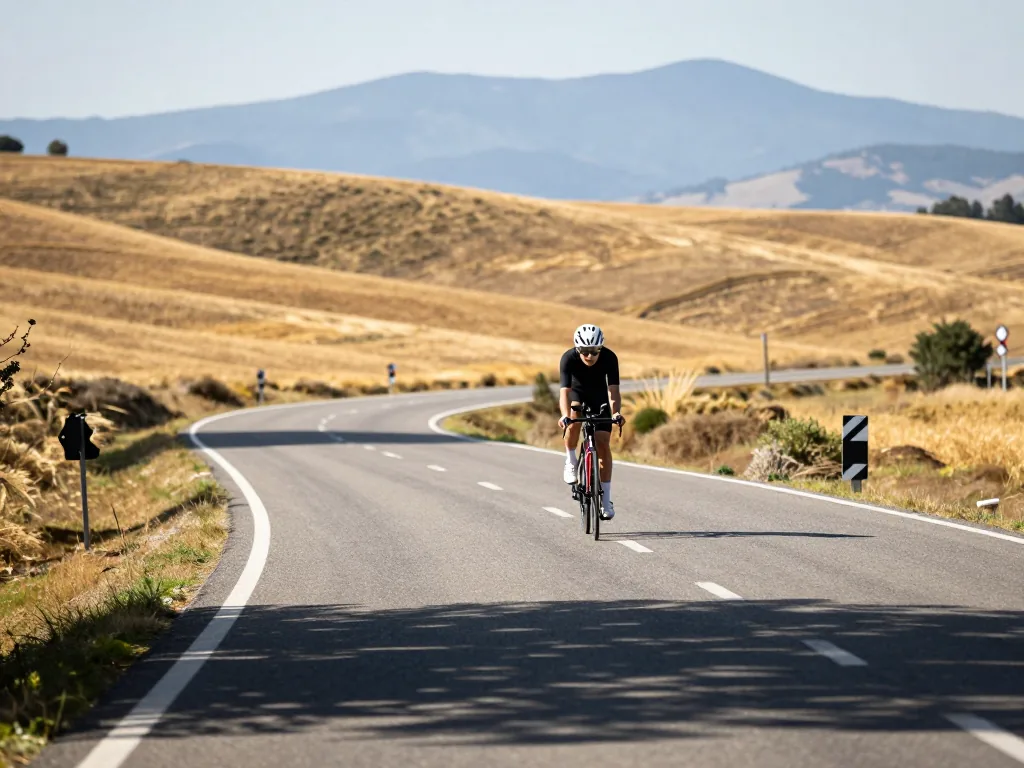
Girona’s reputation as a cycling mecca is well earned. But not every rider dreams of grinding up Rocacorba or suffering through Els Angels. Some want speed, rhythm, and the pure satisfaction of a smooth, unbroken pedal stroke. For them, the region’s flat roads are a hidden paradise—silky tarmac stretching through vineyards, with barely a hill in sight. This guide cuts through the noise and brings you the best of Girona’s flattest, fastest, and most scenic routes. From riverside loops to coastal cruises, you’ll find everything you need, whether you’re chasing a personal best on a time trial bike or just want a recovery ride without a single steep pitch. Every route includes exact roads, turn-by-turn highlights, and insider tips to make each kilometer feel effortless.
Understanding Girona’s Flat Terrain and Geography
To ride flat in Girona, you first need to understand the land itself. The city sits where the Ter and Onyar rivers meet, their waters carving broad alluvial plains over millennia. These low-lying corridors form the backbone of every smooth route in this guide. Elevations rarely stray beyond 70 to 150 meters above sea level—a remarkably consistent profile that turns your power output directly into speed, with nothing sapped by relentless climbing. The terrain runs in two practical directions: east toward the Mediterranean, where the plains widen into the Empordà wetlands, and south toward the gentle undulations of the Gavarres foothills. In both, the gradient stays almost imperceptible—typically under 1% for kilometers at a time, with the occasional 2–3% rise that feels more like a ripple than a hill. This is pavement built for rhythm: long, uninterrupted straights lined with plane trees, rice paddies, and sunflower fields, where the only real obstacle is the wind, which can build from the south in the afternoon.
Now, a deliberate omission. To the north and west, the landscape changes abruptly. Within 15 kilometers of Girona’s cathedral, the terrain surges upward into the Pyrenean foothills, and the infamous Rocacorba climb—a 12-kilometer ascent averaging 7% with ramps above 15%—beckons as a tempting challenge. But this guide is not for those riders. Rocacorba and the mountain passes toward Olot are superb for threshold intervals and summit finishes, yet they violate the core promise of this article: flat, fast, uninterrupted riding. Including them would dilute the focus and betray riders seeking recovery spins, aero testing, or a long day in the big ring. Instead, every route here stays within the alluvial plains and coastal flats, where you can confidently hold 35–40 km/h without ever dropping into your small chainring. The result is cycling defined not by elevation gain, but by sustained speed, clean air, and the quiet satisfaction of a perfectly smooth drivetrain humming beneath you.
The Classic Eastbound Route: Girona to L’Escala
Route Profile and Key Towns
Ride in Girona long enough, and someone will mention “the L’Escala run” with the same reverence they’d reserve for a favorite espresso bar. It’s the region’s default fast group ride—a route that rewards a steady tempo and punishes hesitation on its few short rises. You leave the city’s eastern edge, passing under the medieval arches of Sant Julià de Ramis, where the road bends gently alongside the Ter River. From there, asphalt stretches through Cervià de Ter, a sleepy village whose main square often hosts a mid-ride coffee stop. The terrain stays mercifully flat for the first 20 kilometers, letting you find a rhythm and settle into the draft. The character shifts just before Torroella de Montgrí, where the profile rolls into a series of short, punchy kicks—none longer than 300 meters, but each enough to split a group if you’re not paying attention. Once you crest the final rise, the road funnels you straight into L’Escala, where the Mediterranean breeze and the smell of anchovies from the harbor mark the turnaround. The town itself is functional rather than pretty, but the post-ride seafood and cold vermouth make it worth the effort.
Distance, Surface, and Navigation Tips
The full out-and-back sits between 70 and 80 kilometers, depending on whether you start from the cathedral or the train station. It all runs on quiet secondary roads with smooth, well-maintained asphalt—this is not the place for 28mm gravel tires; you want fast slicks. To navigate, keep the Ter River on your left as you head east. You’ll see green cycle signs pointing toward the coast; ignore any that suggest the N-II highway. That main road is a truck corridor and miserable on a bike. Instead, follow the local lanes that parallel the river, twisting through poplar groves and past irrigation canals. These roads are almost entirely free of traffic on weekday mornings, and even weekends are manageable. The only tricky junction is the roundabout before Torroella, where you must take the second exit to stay on the quiet lane rather than the busier coastal access road. Riding solo? Set a steady effort around 80–85% of threshold on the flats; with a group, expect the pace to spike near the Torroella rollers. Carry one extra bottle—there’s no reliable fountain between Cervià and L’Escala.
The Southern Flat Route: Girona to Cassà de la Selva and Sant Feliu
Quiet Roads and the C-65 Service Road
This is the route locals use when they want to turn off their brains and just turn the pedals. Head south out of Girona, past the suburb of Santa Eugènia, and you’ll quickly find yourself on a web of secondary lanes weaving through cork oak groves and agricultural plains toward Cassà de la Selva. The roads are a joy: smooth tarmac, very little motor traffic, and long sightlines that let you hold a steady aero tuck without worrying about hidden driveways. The key to making this ride genuinely fast comes after Cassà, where you join the C-65 service road. This frontage road runs parallel to the main highway but feels a world apart—wide, glass-smooth, and almost completely empty. For roughly ten kilometers, it descends as a gentle false flat toward the coast, the closest thing Girona has to a dedicated time-trial strip. You can roll a big gear here, hold 40 km/h, and not touch your brakes for ten straight minutes. The only caution is a few roundabouts where the service road crosses farm access points—keep your head up, but otherwise, this is pure speed.
Elevation Profile and Where to Turn Around
The profile is friendly, though not pancake-flat. Near Cassà, you’ll climb a few gentle rollers, each no more than 40-50 meters of elevation gain, spaced out enough that you can power over them without shifting to the small ring. Total ascent for the full route barely reaches 300 meters. Most riders push on to Sant Feliu de Guíxols, where the service road ends abruptly at a roundabout overlooking the Mediterranean. The turnaround is a small café on the waterfront, and the round trip clocks in at about 60-70 kilometers—perfect for a two-hour threshold session or a brisk Sunday morning spin. Short on time or want to keep the effort pure? Turn at Cassà instead. That gives you a tight 30-kilometer loop, almost entirely on quiet roads, with only one significant rise. It’s ideal for a tempo workout: 30 minutes out, turn, 30 minutes back, and you’re done before the coffee gets cold. The Cassà loop’s surface is slightly more rustic, with a few patched sections, so bring wider tires (28mm or more) if you’re planning that shorter version. Either way, this is the route to ride when you want to feel fast without fighting the hills.
The Traffic-Free Option: Via Verde Ruta del Carrilet (Girona to Amer)
If you want pure, uninterrupted cadence without watching for cars, the Via Verde del Carrilet is a revelation. This old railway line slices southwest from Girona’s edge toward the volcanic hills of La Garrotxa, but the stretch you want is the opening 25 kilometers to Amer. It’s the flattest part of the entire route—a masterclass in smooth, sustained speed. The gradient is so gentle it’s almost imperceptible; you’ll only notice it on the return, when a slight tailwind and the barely-there descent push your average speed up noticeably. Whether you’re after a recovery spin, a first ride on new wheels, or a focused interval session where the only variable is your own power, this is the place.
The surface is forgiving and confidence-inspiring: compacted fine gravel and asphalt, rolled smooth, with no deep ruts or loose stones. You can run 25mm road tires at normal pressure, though 28mm feel positively plush. The route is entirely car-free, shared only with walkers, dog owners, and the occasional e-bike commuter, so you can hold an aero tuck without a backward glance. Access is easy—the official trailhead starts near the old train station on the Onyar’s western bank, but you’ll find practical entry points at Parc de la Devesa or Pont de Pedret if you’re closer to the center. Brown and green signposts keep you on track.
The full Carrilet runs to Olot, but resist going past Amer on a road bike. Beyond that, the surface roughens and the gradient stiffens, turning a silky cruise into a gravel grind. Make Amer your turnaround instead. The town square has a proper café stop—try the coca de llardons at the bar facing the church—before you spin back. The outbound incline warms your legs nicely; the return is a fast, satisfying glide that will have you checking your computer in disbelief. All told, it’s a 50-kilometer round trip as close to a velodrome experience as open roads allow. For a different kind of speed, this is your sanctuary.
Wind Strategy: Mastering the Tramuntana
The Tramuntana is not a breeze; it is a personality. Channeled down from the Pyrenees and across the Gulf of Lion, this fierce north wind is the single most decisive factor between a glorious day on the flats and a demoralizing one. On exposed coastal stretches near L’Escala and the wide, open plains around Torroella de Montgrí, it can gust to a staggering 60-80 km/h. That transforms a flat route entirely. A gentle tailwind becomes a terrifying, high-speed push—you’ll hit 50 km/h without pedaling. A quiet headwind turns into a brutal, grinding wall that saps your legs and morale within the first hour. Never underestimate it.
How the North Wind Affects Flat Routes
The geometry of the flatlands around Girona works against you in a Tramuntana. With no hills to break the wind, its full force hits you directly. On the L’Escala coastal road, the wind comes straight off the sea, often with a damp, salty bite. Here, a crosswind is arguably worse than a headwind, forcing you into a constant, unstable lean as you fight gusts that push you toward the traffic lane. The Torroella de Montgrí stretch, inland but equally exposed, acts as a wind tunnel, funneling air between the Montgrí massif and the sea. The result is relentless, gusty pressure that feels like riding through sand. On these days, the flat routes are not easy; they are a test of will.
Practical Riding and Route Adjustments
The golden rule is to check the wind forecast before you even clip in. A quick look at a wind map—Windy or Meteocat—tells you direction and speed. If the Tramuntana is blowing hard, don’t fight it. Plan your outbound leg directly into the wind. Counterintuitive but crucial: you’ll work harder and ride slower on the way out, but you’ll be rewarded with a safe, powerful tailwind on the return. That’s far more efficient and, crucially, safer—you’ll be less fatigued for the final stretch home. On the southern route toward Sant Feliu de Guíxols, the wind is less severe, as the Gavarres hills offer some shelter, though it’s still noticeable. There, use the service road parallel to the main highway; its dense tree lines act as natural windbreaks, providing pockets of calm to recover and regroup. Finally, never ride alone on a windy day. Form a tight paceline, taking short, hard pulls at the front before rotating off. Sharing the load isn’t just about speed; it’s about survival. One rider breaking the wind can save the others 30% of their energy, making the difference between a memorable ride and a miserable one.
Seasonal Timing and Weather Windows
Best Months for Flat Riding
The sweet spot for flat-road cycling around Girona runs from March through June, then again from September through November. Daytime temperatures hover in that Goldilocks zone of 15–25°C—warm enough for short sleeves at midday, cool enough that your heart rate doesn’t spike just to shed heat. Rainfall dips noticeably below deep-winter levels, and the tramontana wind, though never fully absent, proves less punishing on the open stretches toward the coast. July and August are a different beast: the inland flats bake under a relentless sun, with thermometers often touching 32–35°C by early afternoon. But the flat routes hugging the Costa Brava—think the loop from Sant Feliu de Guíxols to Palamós—catch a reliable sea breeze that kicks in around 11 a.m. That onshore flow drops effective temperatures by 5–8°C, making summer rides not just survivable but genuinely pleasant, provided you start early and carry two bidons. If you’re set on peak summer riding, stick to the coastal corridors rather than the Baix Empordà interior, where the air sits still and heavy.
Winter and Rain Considerations
December through February is far from a write-off, but it demands a different mindset. Expect more rain—typically 40–60mm per month—and occasional cold snaps where morning temperatures dip to 2–5°C, especially in the shadow of the Gavarres hills. The Via Verde, Girona’s flagship off-road flat route, turns treacherously slick when wet leaves accumulate on its compacted gravel; cornering at speed there in November is a recipe for a low-side slide. Coastal flats like the C-31 between l’Escala and Roses can get gusty, with crosswinds that catch your front wheel and push you toward the shoulder. The workarounds are simple: always pack a lightweight, packable rain jacket—even if the sky looks clear at 8 a.m., the Mediterranean can conjure a shower in twenty minutes—and switch to 28mm or 30mm tires with lower pressure (around 70–75 psi for tubeless) to maximize grip on wet asphalt and leaf-strewn paths. Also, be wary of the first hour after rain: painted road markings and manhole covers become ice-like, so brake early and lean less through roundabouts. With those adjustments, winter flat riding here remains a joy—just slower, wetter, and infinitely more rewarding when you roll back into Girona for a post-ride cortado.
Beginner Essentials: First Steps and Bike Setup
Before chasing the Strava segments that snake along Girona’s riverbeds, nail the fundamentals. The flat routes are forgiving, but they reward preparation. For your first outing, stick to the Via Verde—the converted railway line running southwest toward Sant Feliu de Guíxols—or the southern loop to Cassà de la Selva. Both share two critical traits: minimal motorized traffic and terrain so smooth you’ll forget you’re pedaling. The Via Verde is crushed gravel and compacted dirt, perfect for building confidence; the Cassà route is tarmac with gentle rollers that never punish. Plan to roll out by 7:30 a.m. The tramuntana wind and Mediterranean heat build quickly after noon, turning a pleasant spin into a battle. Carry two full water bottles—one for electrolyte mix, one for plain water—plus a basic repair kit (two tubes, tire levers, a multi-tool, and a CO2 inflator). A phone with a local SIM or offline maps is non-negotiable; coverage is good, but rural stretches can be spotty. Leave the GPS computer at home if you’re prone to overanalyzing data; just ride.
Gearing and Tire Choice for Flat Speed
Flat riding changes your bike setup. Forget the compact 50/34 crankset that everyone recommends for Pyrenees climbs. On Girona’s flats, you want a standard 53/39 or a semi-compact 52/36 paired with an 11-28 cassette. This gearing lets you maintain a high cadence (85-95 rpm) at 30-35 km/h without spinning out. The 11-28 gives just enough range for the occasional false flat or bridge approach, but keeps gear jumps tight for momentum. For tires, switch to smooth, fast-rolling options in 25-28mm width. Inflate to 90-100 psi—lower for 28mm, higher for 25mm. Girona’s asphalt is generally excellent, but the Via Verde’s packed gravel needs that extra width to glide over small stones. Aero bars are optional but genuinely useful here. The long, straight sections south of Cassà are perfect for tucking into a low position, especially when the morning headwind picks up. You’ll save 10-15% of energy on a 20-minute stretch—energy you can spend on the fast return leg. If you don’t have aero bars, simply drop your hands to the drops and flatten your back; it’s 80% of the benefit for zero cost.
Advanced Training and Route Customization
Once you’ve logged the base kilometers and know the terrain intimately, the real magic begins: tailoring these flat routes to hit specific physiological targets. Girona’s coastal plains reward structure. You don’t need a power meter—a heart rate monitor or perceived exertion will do—but you do need a plan.
Building a Tempo or Endurance Session
For a pure endurance day, look no further than the L’Escala route. It’s your bread-and-butter for aerobic depth. The goal isn’t speed but steady, unbroken effort. Plan for 3 to 4 hours at 60-70% of your functional threshold power (FTP) or a conversational heart rate. The coastal terrain is forgiving enough to avoid explosive surges, yet varied enough to keep your legs awake. Keep your cadence high (90-100 rpm) and your torso still. This session should leave you pleasantly tired, not wrecked.
When it’s time to sharpen the sword, switch to the southern route for tempo work. This builds your sustainable “race pace” engine. After a 30-minute easy spin, perform 3×20-minute intervals at 80-85% of your FTP. Here’s the key: the flat, exposed sections are your canvas. Hit your target effort on the dead-flat stretches, then—crucially—use the gentle rollers as natural recovery zones. Don’t fight the hills; ease off, drop to 60%, and let the terrain pull you over the crest. This teaches your body to recover while still moving, a skill that pays off in any fondo or gran fondo.
Combining Routes for Longer Distance
If 4 hours isn’t enough, stitch the network together for a serious day in the saddle. The classic big loop links the eastern and southern routes into a monster of 120 to 140 kilometers. The connecting tissue is the coastal road between L’Escala and Sant Feliu de Guíxols. Be warned: this adds a few short, punchy climbs near the sea that will test your legs after the flat miles. It’s not pure flat, but the reward is dramatic seascapes and a sense of accomplishment.
Alternatively, for a mixed-surface epic, start on the Via Verde (the old rail trail) as a flat, protected warm-up. After 15 kilometers, transition onto the eastern route via Girona’s outskirts. This adds gravel and quiet farm tracks to the beginning, giving you a longer, more varied journey without committing to a full mountain stage. This is your ultimate test of pacing and nutrition.
Girona’s flat cycling routes deliver the ideal mix of speed, scenery, and safety—proof that world-class riding doesn’t require mountain passes. Whether you’re tracing the coastal drag or weaving through inland orchard loops, these roads let you dial in cadence, power, and pure momentum, minus the relentless climbing the region is known for. The takeaway? Match a route to your distance and wind tolerance, then head out early to dodge both traffic and the tramontana. Ready to ride? Pick one of the circuits—start with the confidence-boosting 40km Sant Jordi loop—and clip in. The smooth tarmac’s waiting; just roll out.
Frequently asked questions
What makes the flat routes around Girona different from the hilly ones?
The flat routes follow the river valleys and coastal plains, avoiding the climbs into the Gavarres or Rocacorba. They are ideal for endurance training, recovery rides, or riders who prefer sustained speed without steep gradients. Expect long, straight sections with gentle rollers rather than sharp ascents.
Where do most flat routes start from in Girona?
Most flat routes start from the city’s southern or eastern edges, such as the Devesa park or the沿着 Ter River bike path. From there, you can ride toward Sant Gregori, Celrà, or the plains of the Baix Empordà without needing to climb. Starting early avoids traffic and heat on the open roads.
What is the classic flat loop that most locals recommend?
The classic flat loop goes Girona–Fornells de la Selva–Cassà de la Selva–Llagostera–Sant Feliu de Guíxols (via the coastal flat) and returns along the old N-II or the Via Verde. This loop is roughly 80–90 km with minimal elevation gain, mostly under 200 meters. It takes you through quiet country lanes and the flat coastal stretch near the sea.
Are there any dedicated bike paths or greenways on these routes?
Yes, the Via Verda del Carrilet (the old train line) runs from Girona to Sant Feliu de Guíxols and is mostly flat, though it has a few gentle ramps. The Ruta del Ter along the river is another flat, traffic-free path for the first few kilometers out of town. However, most flat road routes use quiet secondary asphalt roads with light vehicle traffic.
How do I avoid the wind when riding the flat sections near the coast?
The coastal flats, especially between Palamós and Sant Feliu, are exposed to the tramontana and sea breezes. Plan to ride with a prevailing south wind in the morning, or choose inland flat routes like the plains of Girona–Banyoles–Porqueres, which are more sheltered. Check the wind forecast and consider an out-and-back so you can adjust your effort.
What is the best time of year for flat riding in this area?
Spring (April–June) and autumn (September–October) offer mild temperatures and less wind, making them ideal for long flat rides. Summer can be hot, but the flat routes near the coast benefit from sea breezes, while inland plains get very hot by midday. Winter is rideable but can have cold, windy days, so choose sunny windows.
Are there flat routes that avoid all significant climbs for beginners?
Yes, the Girona–Sant Gregori–Salt–Fornells loop is almost completely flat, with less than 50 meters of elevation gain over 25–30 km. Another beginner-friendly option is the out-and-back along the Ter river to Cervià de Ter, which is pancake flat. These routes use quiet farm roads and are perfect for building confidence.
Can I link flat routes to reach the train stations for a longer one-way ride?
Absolutely, the flat routes connect well to the train stations at Caldes de Malavella, Llagostera, and Sant Feliu de Guíxols. You can ride flat from Girona to Caldes (about 30 km) and take the train back, or start from Sant Feliu and ride inland on the Via Verda. The train allows you to do one-way loops without repeating the same roads.
What kind of road surface should I expect on these flat routes?
The majority are smooth asphalt on well-maintained secondary roads, but some sections near the river or on the Via Verda are compacted gravel or dirt. For road bikes, stick to the paved routes; for gravel bikes, the Via Verda and some farm tracks are fine. Watch for occasional cattle grids and sandy patches after rain near the coast.
Are there any flat routes that include a coffee stop or village center worth visiting?
Yes, the flat route through Cassà de la Selva and Llagostera passes through charming villages with several cafés and bakeries. The coastal flat route stops at Sant Feliu de Guíxols’ promenade, where you can refuel with a coffee and sea view. For a quieter stop, the village of Sant Gregori has a small square with a couple of bars.