Pedal Through Paradise: The Ultimate Scenic Road Bike Guide to Empordà
Discover Empordà's stunning coastline, medieval villages, and quiet roads on this ultimate scenic road bike guide. Plan your perfect ride today!
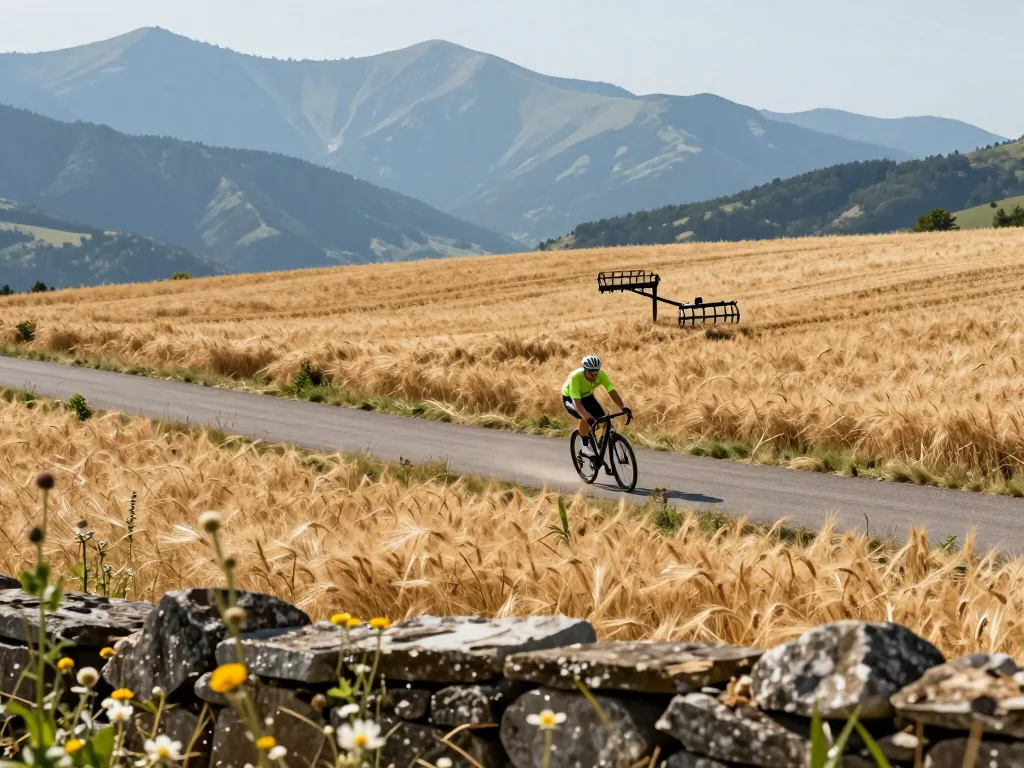
Glide past medieval hilltop villages, vineyards glowing in the Mediterranean sun, and the deep blue curve of the Costa Brava unfolding with every turn of the crank. Tucked between the Pyrenees and the sea, the Empordà region is a hidden gem with some of Europe’s most breathtaking—and surprisingly quiet—cycling roads. This guide unlocks that paradise, offering meticulously curated routes, insider tips on the best climbs and coastal stretches, and practical advice on where to refuel. Whether you’re a seasoned gran fondo rider or a leisure cyclist chasing golden-hour panoramas, you’ll find everything needed to plan the ride of a lifetime through this Catalan wonderland.
Before you clip in and chase the horizon, it pays to understand the land you’re about to ride. The Empordà is not one uniform plain; it’s a duet of two distinct personalities, divided roughly by the meandering Fluvià River. Knowing which half you’re in will shape every gear choice you make.
Understanding the Two Halves: Alt and Baix Empordà
The Alt Empordà (Upper Empordà) is the northern, wilder sibling. Its backbone is the Serra de l’Albera, the last foothills of the Pyrenees before they slump into the sea. Here, the riding is bold and demanding: expect short, explosive ramps out of villages like Sant Llorenç de la Muga, and long, grinding ascents toward the medieval citadel of Castelló d’Empúries. The terrain is drier, scattered with cork oaks and granite outcrops, and the wind—the notorious tramuntana—can hammer you sideways on exposed ridges. This is where you earn your climbs, but the reward is a view that stretches from the Bay of Roses to the peaks of southern France.
South of the Fluvià lies the Baix Empordà (Lower Empordà), a softer, greener quilt of rolling hills, vineyard-lined valleys, and flat coastal wetlands. The riding here is more rhythmic: long, smooth stretches through sunflower fields (in season) and quiet lanes bordered by stone walls and umbrella pines. The climbs are shorter but punchy—think of the ramp up to the hilltop village of Pals, or the gradual drag toward Peratallada’s moated castle. This is the half for building speed, linking villages like Begur, Palafrugell, and Monells without ever repeating a road. The Baix rewards a fluid, endurance-focused style; the Alt demands raw power.
Best Seasons and Weather for Cycling
Timing is everything. The ideal windows are April to early June and mid-September to late October. In spring, the plains are emerald, the wildflowers are out, and the tramuntana has usually softened to a manageable breeze—though it can still surprise you, so pack a windproof gilet. Autumn offers warm, settled days (often 20–24°C) and the grape harvest turns the vineyards into a patchwork of gold and crimson. July and August are best avoided: temperatures routinely exceed 32°C on the asphalt, and the coastal roads clog with holiday traffic. Winter is quiet and often dry, but the tramuntana can make descents dangerous; if you ride then, stick to the sheltered inland valleys of the Baix.
“The Empordà rewards the patient rider: flat plains give way to sudden climbs, and every village hides a Romanesque church or a stone tower worth a pause.”
Expect to share the road with tractors during harvest, but little else. The key is to ride early—by 8:00 the light is golden, and by noon you’ll want to be at a village square, nursing an espresso and a slice of coca de recapte.
Your journey begins in Figueres, the surrealist capital of the Empordà and birthplace of Salvador Dalí. Behind the theatrical façade of the Dalí Theatre-Museum, this town serves as the region’s most practical launchpad. The high-speed AVE train links Figueres-Vilafant station to Barcelona in under an hour, so you can arrive with your bike box and roll straight onto quiet country lanes—a genuine advantage for car-free cyclists. Before clipping in, stop at a local forn (bakery) on Carrer de la Jonquera for a coca de recapte—flatbread with roasted peppers and anchovies—and fill two bottles at the public fountain in Plaça de la Independència. The town’s bike shops, like the long-standing Ciclos Portell on Avinguda de Salvador Dalí, stock last-minute tubes, chain lube, and honest advice about wind on the coastal flats. Rentals run €25–€45 per day for a carbon endurance bike, or €15–€25 for a hybrid.
The Empordà suits both the endurance rider and the slow traveler, but your route structure will shape the experience. For a multi-day loop, base yourself in Figueres for three to four nights. On day one, ride south through the orchard-lined plain toward Pals, a medieval hilltop village with a perfectly preserved Jewish quarter and a 360-degree view over the Baix Empordà’s rice fields. Day two heads inland through the gavarres—rolling granite hills cloaked in cork oaks and vineyard terraces—linking Monells, Peratallada, and Vulpellac. These are some of Catalonia’s quietest roads, with gradients that never exceed 7% yet roll relentlessly. Day three returns north via the C-66’s parallel service roads, finishing with the climb past the Romanesque monastery of Sant Pere de Rodes. This loop totals roughly 220–260 km, letting you ride unloaded and return to the same hotel each night.
Alternatively, a one-day epic of 80–100 km runs from Figueres to L’Escala and back, hugging the coastal flatlands near the Aiguamolls de l’Empordà Natural Park. Head east toward Castelló d’Empúries, then south along the quiet road past the restored medieval mill at Empuriabrava’s canals. The terrain is almost perfectly flat, but the tramuntana—a dry, northerly wind—can turn a gentle cruise into a grinding battle. Plan for a calm morning, and you’ll earn a swim in the Mediterranean at L’Escala’s Platja de Riells before the return leg. Finally, always carry a physical topographic map (the Alpina 1:40,000 sheet for the Alt Empordà is ideal) as backup; mobile coverage is good in towns, but rural stretches between Peralada and Viladamat can drop to zero bars, and a dead phone in a headwind is no one’s idea of paradise.
The Flat and Wild North: Aiguamolls de l’Empordà
If the south of Empordà is all hills and medieval stone, the far north is a complete sensory shift. Between Castelló d’Empúries and Sant Pere Pescador, the land flattens into a vast, luminous mosaic of lagoons, salt marshes, and grazing pastures. This is the Parc Natural dels Aiguamolls de l’Empordà, one of Catalonia’s most important wetlands—and it hides some of the finest, most tranquil road cycling in the region. The horizon here is a thin line between sea and sky. For a ride that feels almost otherworldly, this is your escape.
Cycling the Wetland Park’s Quiet Roads
Narrow asphalted farm tracks and quiet country lanes crisscross the park’s interior, and they’re a joy to ride. The terrain is genuinely pancake-flat, perfect for a recovery spin or a fast, gear-crunching workout. A classic loop starts in Castelló d’Empúries, heading east toward the beach at Empuriabrava. Instead of turning toward the marina, keep straight onto the road that threads between the ponds. The surface is smooth. With the Pyrenees rising dramatically to the north and the Mediterranean a whisper away to the east, you’ll feel a profound sense of space. Wind can be a factor, but low-lying dunes and dense reed beds offer natural shelter, creating pockets of surprising calm. Don’t skip the small, unmarked spurs that dead-end at bird hides—that’s where you’ll find the most pristine tarmac and absolute solitude.
Birdwatching and Nature Stops Along the Way
This ride is as much for the eyes as for the legs. The Aiguamolls are a vital stopover on the migratory route between Africa and Europe, and the birdlife is spectacular. Pedal slowly along the Canal Vell and you’ll almost certainly spot purple herons stalking the shallows, glossy ibis probing the mud, and—in spring and autumn—flocks of flamingos turning the water pink. Plan a stop at the Mas del Matà visitor centre, where a raised boardwalk lets you walk (or push your bike) out over the reeds for a panoramic view of the lagoons. Further on, the Estany de Vilacolum is a quieter, less-visited hide that rewards patience with sightings of avocets and black-winged stilts. Bring a small pair of binoculars—they’ll add a whole new dimension to your rest stops. For a quick refreshment, the tiny village of Sant Pere Pescador has a couple of no-frills bars serving cold drinks and tapas, perfect for a mid-ride break.
“The Aiguamolls are a cyclist’s secret: pancake-flat, wind-sheltered, and utterly peaceful, with flamingos and herons as your only traffic.”
Want a longer day? Link this loop with the coastal road to L’Escala. But be warned—the quiet magic of the wetlands is a hard act to follow. Allow 2.5 to 3.5 hours for the main loop, and budget for plenty of photo stops. A basic bike rental in the area will set you back from €25 to €45 per day; a high-end carbon road bike can range from €55 to €90 per day.
Coastal Highlights and Ancient Ruins
This stretch of the Empordà coast is where history and landscape collide with spectacular results. Rolling out of L’Escala’s working harbor, the air shifts from anchovies to the dry, herbaceous perfume of Mediterranean pines. Within ten minutes of easy pedaling, you reach Empúries—the only place in Spain where Greek and Roman ruins sit side by side on the shoreline. Your first mandatory stop. Lock the bike near the entrance and allow a full hour for the uneven stone paths. Trace the grid of an ancient Greek agora, then climb to the Roman villa terraces, where mosaic floors still gleam under open sky. The site’s bluff-top position above the sea makes it perfect for catching your breath while sailboats drift below. Entry runs €6 to €8 per adult, and the detour adds roughly 2 kilometers of walking—well worth the break from the saddle.
From Empúries, follow the quiet coastal road south toward Sant Martí d’Empúries, a medieval walled village perched on a rocky promontory. The pavement is smooth but unrelenting: short, sharp rollers punch up from sea level to headland viewpoints every few kilometers. Not mountain passes, but they’ll test your legs and reward you with sweeping views of the Gulf of Roses. The road hugs the cliffs, with exposed sections where the tramontana wind can push you sideways—keep a firm grip on the drops. After the pine-shaded coves of El Montgrí Natural Park, the landscape opens into rice paddies and marshland before rising again as you approach Begur.
Begur’s cobbled old town sits atop a hill, the final approach from the coast a steady 7% gradient. Push through the narrow streets to the 11th-century castle ruins at the summit. The viewpoint here is the region’s finest: a 360-degree panorama of the Costa Brava’s jagged coastline, the Medes Islands, and the Pyrenees on the clearest days. The extra climb is brutal in the afternoon heat, but the payoff is absolute. Descend into Begur’s main square for a late lunch—local botifarra with white beans runs €14 to €18, a cold beer €3 to €4. From here, loop back inland via the quiet lanes of the Baix Empordà, or continue south toward Palafrugell for a longer day in the saddle.
Medieval Villages of the Baix Empordà
The Baix Empordà’s real pulse isn’t on the coast—it’s inland, where golden-stone hilltop villages seem frozen in time. Here, your road bike earns its keep. The terrain rolls gently, with short, punchy climbs that open onto sweeping views of sunflower patches and rice paddies, then drop you into labyrinthine streets unchanged since the 13th century.
Pals, Peratallada, and Monells: Cobblestones and Charm
Start in Pals, a perfectly preserved hilltop gem. Approach from the east on the GI-651, and the Torre de les Hores clock tower reveals itself dramatically above vineyard-terraced slopes. Inside, dismount and walk your bike up Carrer Major’s steep, smooth cobblestones. At the top, the Mirador Josep Pla—named for the famed Catalan writer—offers a dizzying panorama of the Medes Islands and the entire Empordanet plain. From Pals, take the quiet lane west to Peratallada. The name means “carved stone,” and you’ll see why as you cross its dry moat and pass through a fortified gateway into a maze of alleys and arched passageways. The 11th-century castle and its square make a perfect coffee stop; the honey-colored limestone glows warmly in late afternoon light. Finally, pedal the short, flat stretch to Monells. Smaller but equally enchanting, it centers on a vast, irregular medieval square—the Plaça Major—lined with arcades and overhanging timbered houses. It’s ideal for a picnic of local pa amb tomàquet and sheep’s milk cheese before the return leg.
Ullastret and the Iberian Ruins
Just west of Monells, a slightly longer climb brings you to Ullastret, and the effort pays off twice. The village is charming, but the real treasure lies below: the Iberian settlement of Puig de Sant Andreu. It’s the largest, best-preserved Iberian site in Catalonia, dating to the 6th century BC. Park your bike at the entrance and walk the ancient stone ramparts. You’ll see house foundations, cisterns, and a complex street grid, all set on a strategic hill that gave the Indigetes tribe commanding views of the plains. The on-site museum is small but excellent, with Greek ceramics and the famous “Ullastret deer” sculpture. The road up is smooth and quiet—perfect for cooling your legs before the descent.
“These villages are best approached by bike: cars struggle with the narrow lanes, but a road bike lets you glide in and out before the tour buses arrive.”
For a full loop, plan 55 to 65 kilometers from the coast, with 600 to 700 meters of climbing. Roads are generally well-maintained, though occasional farm debris appears. A compact crankset helps on the steeper ramps into Ullastret. Entry to the archaeological site costs a modest €2 to €5 per adult. There are no bike shops in these villages, so carry a spare tube and mini-pump. The reward for self-sufficiency is total solitude on some of the Mediterranean’s most romantic roads.
Terrain, Climbs, and the Mountain Passes
Rolling Hills and Flat Plains: What to Expect
The Empordà’s appeal to road cyclists is its deceptive variety. The Pyrenees to the north are brutally vertical, but this region unfolds as a patchwork of gentle hills and vast, pancake-flat plains—the pla de l’Empordà—stretching toward the sea. Most curated loops stay under 300 meters of elevation gain per day, making the riding remarkably forgiving. That suits high-mileage endurance rides, tempo sessions, or simply spinning through medieval villages without a mountain looming overhead. The wind, however, is the true adversary. The tramontana can whip across the flats with surprising force, so plan coastal out-and-back sections with the breeze at your back whenever possible. The asphalt on secondary roads is smooth, cutting through sunflower fields and rice paddies with uninterrupted views of the Canigó peak on clear days.
The Gavarres and Albera Ranges: Optional Harder Climbs
If you crave a gradient, the Empordà delivers without overwhelming. The Gavarres Range, a low, forested massif south of La Bisbal d’Empordà, offers short, punchy climbs—typically 4 to 6 kilometers at 5-7%—winding through cork oak groves and hidden hermitages. They are perfect for a morning leg-buster before a long lunch. More rewarding is the Albera Range to the northeast, forming the natural border with France. Here, the riding turns serious but stays scenic. For a genuine challenge, include the Coll de Banyuls near the French border. The pass climbs from the Catalan coast to 357 meters, but its switchbacks are relentless, with ramps of 10% that test your pacing. It contrasts starkly with the flats below, and the descent into the French village of Banyuls-sur-Mer is a just reward. A word of caution: while the main passes are pristine, many village approaches—especially in the Albera foothills—are paved with ancient, polished cobblestones. These become treacherous when damp. Descend with caution on cobbled village approaches; brake early, shift your weight back, and let the bike roll over the gaps rather than fighting them. The technical challenge is part of the charm, but a moment of inattention can ruin a perfect day in paradise.
Practical Logistics for Self-Guided Riders
Getting There: Airport and High-Speed Train Access
Your journey to Empordà’s tarmac begins most efficiently via Girona–Costa Brava Airport (GRO). This compact hub, served by Ryanair and Jet2 from across the UK and northern Europe, sits just 30–40 minutes south of the region’s core cycling roads—making it the undisputed choice for self-guided riders. From the arrivals hall, you can assemble your bike box and pedal straight out, with the first climbs toward the Gavarres beginning within 15 kilometers. Alternatively, a taxi (from €25 to €40 per ride) takes you to Figueres or Castelló d’Empúries to start on flatter ground.
Prefer rail? Barcelona Sants station is your gateway via the high-speed AVE line. The train to Figueres–Vilafant takes just 55 minutes, with one-way tickets ranging from €20 to €50 per person depending on booking timing. From the station, a gentle 5-kilometer spin brings you into Figueres’ old town, where Dali’s surrealist legacy and wide, quiet boulevards make an ideal staging point. Keep in mind that AVE requires booking a bike space in advance (from €5 to €10 per bike), while boxed bikes travel free as checked luggage on most airlines—so flying may be the smarter option if you’re bringing your own rig.
Bike Rental, Repair, and Daily Supplies
Skipping the airline baggage fees? Rental shops cluster in Figueres, Cadaqués, and Girona city. Expect to pay from €35 to €70 per day for a carbon endurance road bike with 28mm tires—the sweet spot for Empordà’s mix of smooth asphalt and occasional farm-track shortcuts. Weekly rates typically drop to €180–€350, and most shops include a helmet, two bottle cages, and a basic repair kit. Ask for a compact crankset (50/34) and an 11-32 cassette; the climbs to Sant Pere de Rodes and Els Angels are relentless but rideable.
Mechanical emergencies are rare on well-maintained roads, but Figueres has three reliable workshops within the old town walls, charging from €15 to €40 per repair for a tube replacement or derailleur adjustment. For daily supplies, every village of any size—from L’Escala to Roses—has a forn de pa (bakery) open by 7 a.m. and a small grocery (supermercat) stocking isotonic drinks, nuts, and local oranges. Stock up in the morning, as many rural roads between vineyards offer zero services for 20-kilometer stretches. And always carry cash: several farm kiosks selling figs and cheese don’t accept cards.
“Pack light, but never skip a spare tube, a mini pump, and a lock—Empordà’s villages are safe, but your bike is your ticket home.”
Food, Culture, and Rest Day Ideas
Local Cuisine for Cyclists: Rice, Fish, and Wine
The Empordà is a land of contrasts—rugged coast and fertile plain—and its table reflects that duality. After a long morning in the saddle, your legs crave more than water. This is the heart of Catalan gastronomy, where the Mediterranean isn’t just a view; it’s the pantry. The signature dish is arròs negre—black rice cooked in squid ink—a savory, briny paella-style plate far more satisfying than its saffron cousin. It arrives with alioli on the side; use it sparingly unless you plan to climb afterward. For a lighter, protein-packed option, try suquet de peix, a rustic fisherman’s stew of local rockfish, potatoes, and garlic, perfect for rebuilding muscle. And you can’t leave without sampling the region’s beloved Empordàlia wines—a crisp, dry blend of Garnatxa and Cariñena. Many vineyards offer casual tastings with views of the Pyrenees; a half-glass of rosé is a legitimate recovery drink. For a proper cyclist’s lunch, head to the medieval villages of Pals or Peratallada, where many restaurants cater specifically to riders. Fixed-price midday menus, from €18 to €28 per person, include water, bread, and a choice of main—no tourist markup.
Cultural Landmarks Beyond Dalí: Monasteries and Markets
Though Salvador Dalí’s surrealist shadow looms large, the region’s true soul lies in its older stones. On a rest day, swap cleats for walking shoes and explore the Benedictine monastery of Sant Pere de Rodes, perched dramatically on a cliff above the sea. The climb to its entrance is steep, but the reward is a 10th-century complex with panoramic views stretching from Cap de Creus to the French border—far more rewarding than any museum wall. For a grounded experience, time your rest day to coincide with a local market, like the Saturday one in Figueres or the Wednesday market in La Bisbal d’Empordà. There, you’ll find artisanal cheeses, cured bull sausage, and hand-thrown ceramics—edible souvenirs that pack flat in a jersey pocket. If you do crave Dalí, visit the Dalí Theatre-Museum in Figueres on your arrival day or a rest day, but book tickets online in advance to skip the midday queue. The museum is overwhelming in the best way; budget at least three hours. For a quieter cultural hit, the Romanesque church of Sant Quirze de Colera, hidden in the woods near the cycling route to Girona, offers solitude and a cool, shady interior—ideal for a mid-ride pause on a hot afternoon.
The Ride Awaits
Empordà isn’t just a place you pedal through—it’s a landscape that rewards every climb with Mediterranean views, every descent with the scent of pine and sea salt, and every village stop with history and hospitality. The key takeaway is simple: this region offers some of Europe’s most varied and visually stunning road cycling, from coastal cliffs to vineyard-lined valleys, all within a compact, rideable area. Your next step is to pick a starting point—Figueres for inland routes or Cadaqués for coastal drama—and plan a 3–5 day loop, letting the tramontana wind guide your pace. Don’t overthink the logistics; book a bike, download a route, and let the quiet roads and golden light do the rest. The only wrong turn is staying home.
Frequently asked questions
What is the best time of year to do this scenic road bike ride through the Empordà?
Spring (April–June) and early autumn (September–October) offer mild temperatures, lower wind, and vibrant green or golden landscapes. Summer can be very hot and dry, while winter days are short and some mountain passes may have icy patches.
How long is the route and what is the total elevation gain?
The classic loop is roughly 100–120 km, with about 1,500–1,800 meters of climbing depending on your exact start point and detours. The climbs are rolling rather than alpine, but the constant up-and-down through the Gavarres and Albera ranges adds up.
Where does the ride typically start and end?
Most riders start from Figueres or Girona, both well-connected by train, and loop through the plains and hills of the Empordà. A common start is Figueres, heading east toward Roses, then south along the coast and inland through La Bisbal d’Empordà before returning.
What kind of road surfaces should I expect?
The majority of the route is on quiet, well-paved secondary roads with occasional sections of smooth tarmac on main roads. Some short stretches, especially near vineyards and farm tracks, may have patched asphalt or light gravel, so a road bike with 28mm tires is recommended.
Are there significant climbs, and how steep are they?
Yes, but none are brutal; the hardest is the climb from Cadaqués to the Sant Pere de Rodes monastery, with ramps up to 10–12% for a few hundred meters. Other climbs like the Coll de Banyuls and the ascent to Peratallada are gentler, typically 4–7% gradients.
What are the must-see stops along the way?
Don’t miss the medieval village of Peratallada, the Greek and Roman ruins at Empúries, and the coastal viewpoint at Cap de Creus. Also stop for a coffee in the fishing town of Cadaqués and for a photo of the surrealist castle at Pubol, which was Dalí’s gift to Gala.
Is the route well-signposted, or do I need a GPS?
There is no official single route, so you should carry a GPS device or a downloaded map on your phone. The roads are easy to navigate with a simple cue sheet, but some turns are easy to miss, especially in the vineyard mazes near the Fluvià river.
What should I pack for this ride in terms of food and water?
Carry at least two large bottles (750ml each) because services can be sparse between villages, especially on the coastal section. Pack energy bars or a sandwich, as the best stops (like a bakery in Cadaqués) may be 30–40 km apart, and some mountain roads have no shops.
Are there any safety concerns specific to this region?
The main concern is the tramontana wind, which can gust strongly, especially near the coast and on exposed ridges; check the forecast and be ready to ride into a headwind. Also, some narrow roads have no shoulder, and drivers may be fast on the main routes, so stay alert and ride single file.
Can I do this ride as a day trip, or should I plan an overnight?
It’s doable as a long day ride for fit cyclists (5–7 hours of riding), but an overnight in Cadaqués or La Bisbal allows you to enjoy the scenery and visit the sights without rushing. If you choose a shorter 70–80 km version, you can easily return to your start by late afternoon.