Conquer the Girona Hills: The Ultimate 2026 Road Cycling Challenge
Conquer the demanding 2026 Girona hills on this ultimate road cycling challenge. Tackle steep climbs, scenic routes, and test your limits today.
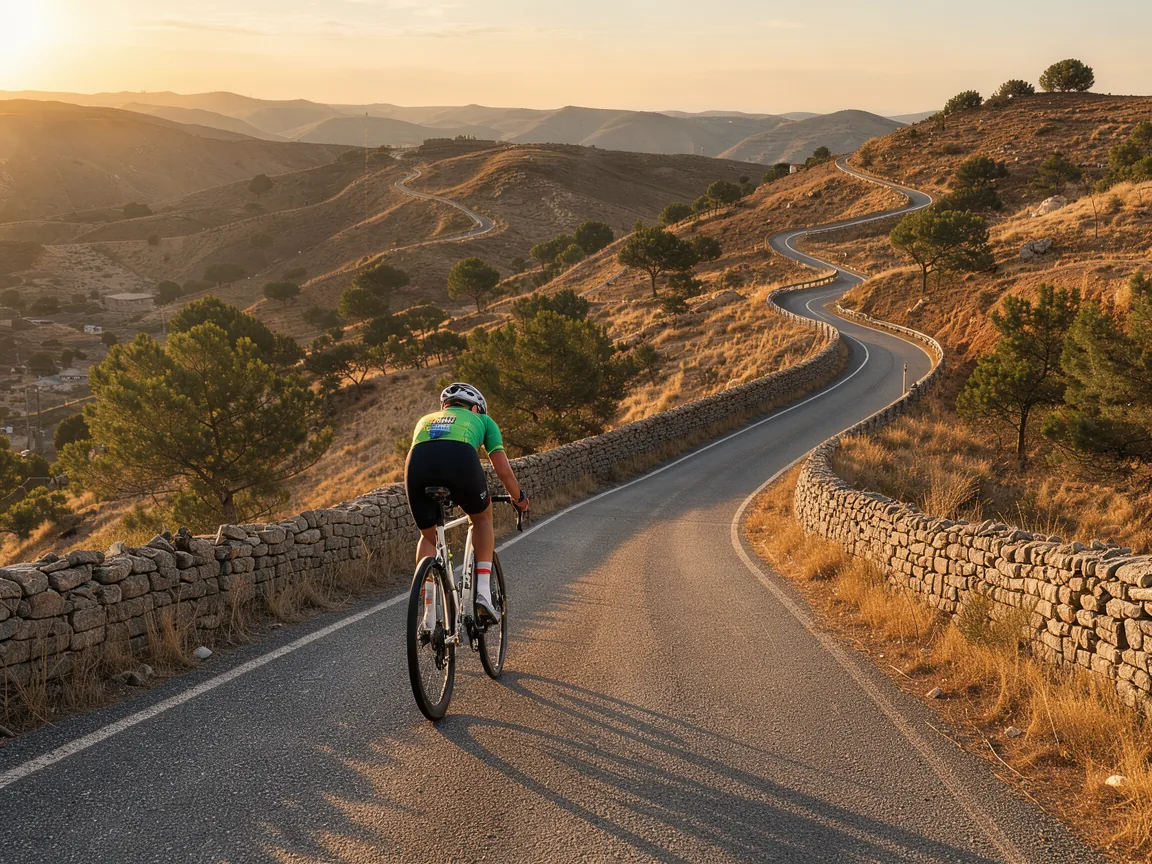
Nestled in the rugged foothills of the Pyrenees, the Girona region has long drawn the world’s most demanding cyclists. In 2026, it remains the ultimate proving ground for your climbing legs. This isn’t a casual Sunday spin through olive groves—it’s a gut-check journey up the notorious Rocacorba, Sant Hilari Sacalm, and the relentless Els Angels. You’ll find the exact turn-by-turn route here, along with elevation profiles that don’t lie, and the insider pacing strategies pros use to conquer these legendary tarmac ribbons without blowing up. Whether you’re chasing a personal best or just aiming to survive with your ego intact, this is your definitive blueprint for owning the hills that break the boldest riders.
Getting Oriented in Girona as a Cycling Base
Why Girona Remains a Top Training Destination in 2026
By 2026, Girona has stopped being just a cycling hotspot. It is now the definitive European hub for road cyclists who want challenge without sacrificing convenience. The appeal is threefold. Within 30 kilometers of the city center, you find a dense network of quiet, technical climbs. The Mediterranean climate stays dry and predictable, stretching the riding season from February through November. And the cycling infrastructure has grown into a self-sustaining ecosystem. Alpine passes get overcrowded; the Netherlands offers nothing but monotonous flats. Girona, by contrast, delivers an endless patchwork of narrow asphalt ribbons that wind through cork oak forests, past medieval stone villages, and up gradients that regularly pitch above 15 percent. The city itself has evolved with the sport. Dedicated bike lanes are everywhere now, major hotels offer secure indoor parking, and cafés cater specifically to riders—espresso service starts at dawn, mechanics stand ready. In 2026, the region added better signage on popular climbing routes, so self-guided navigation is far easier than it used to be.
Arriving and Getting Around with a Bike
Logistics come first, and Girona makes them painless. Fly into Girona–Costa Brava Airport (GRO), just 12 kilometers south of the city, and you can be on the bike within 45 minutes of landing. Barcelona El Prat (BCN) offers more flight options; from there, a direct Renfe train reaches Girona’s central station in roughly 40 minutes, with bike spaces on most services. Inside the city, the terrain is flat enough for easy riding to your accommodation, but for far-flung routes east of town, you will want a car or a bike-friendly taxi. Local drivers are generally cyclist-aware, given the sport’s economic weight here. Still, on main arteries like the C-25 and N-II, traffic moves fast. Stick to secondary roads—the GPX routes you create or download are built entirely on them. For your setup, bring a compact or mid-compact crankset (34/50 or 36/52) with a wide-range cassette (11-32 or larger). The steepest ramps—the final pitches of Els Angels, the brutal Sant Martí Vell climb—will punish a standard 39/53 with an 11-28. Gear accordingly.
Understanding the Core Challenge: The Rocacorba Ascent
To conquer the Girona hills, you must first make peace with Rocacorba. This is not merely a climb; it is the region’s ultimate test of sustained power and mental resolve. The route begins deceptively in the quiet, sun-dappled village of Sant Martí de Llémena. From the town square, the road rolls gently for the first three kilometers, lulling you past stone farmhouses and the gurgling Llémena river. Do not be fooled. The real work begins when the asphalt narrows and the gradient pushes past 8% for the first time—the shift from warm-up to war. Trees close in, the air thickens with pine and humidity, a stark contrast to the exposed terrain ahead.
The summit, crowned by the hermitage of Santuari de Santa Maria de Rocacorba, sits at 992 meters, but altitude is only half the story. The final 4.5 kilometers are a brutal, unrelenting series of switchbacks that test both gear selection and resolve. The surface mixes smooth tarmac with rough patches, demanding constant attention to your line. As you climb, the forest thins, revealing staggering views over the Gavarres massif and, on clear days, the Mediterranean glinting far off. Those views come at a price: wind. Exposed ridgelines funnel gusts that can halt your momentum, forcing you to grind a heavier gear than planned.
The Rocacorba climb is not a single gradient; it is a series of false flats, steep switchbacks, and exposed ridgelines. The final 2 kilometers near the hermitage are the most demanding, with ramps exceeding 12% in places. Do not underestimate the mental toll of seeing the summit repeatedly before actually reaching it.
At the hermitage, silence is profound. The reward is not just the technical descent—sharp braking on every hairpin—but the deep sense of having earned your place among the hills. For a truly local challenge, ride on a weekday morning. You will likely have the road to yourself, save for wild goats and the echo of your own breathing. There are no services at the summit, so carry at least two full bottles and ample nutrition. The round trip from Girona city center, including the climb and return, is roughly 70 kilometers—a perfect half-day expedition. Budget for a post-ride meal in Sant Martí; local menus offer hearty Catalan fare for a realistic range of from €15 to €25 per main course, a worthy reward for conquering the beast.
Most riders obsess over Rocacorba’s brutal northern ramps, but that’s a critical mistake: they dismiss Els Àngels as an afterthought. On the 2026 loop, this ascent is your tactical warm-up, your rhythm-setter, and—if you misjudge the pace—your undoing before the real fight begins. The climb doesn’t start at a scenic viewpoint; it kicks off on the industrial edge of Girona’s western suburbs, where the road narrows and tilts upward without ceremony.
Route Profile and Key Ramp Locations
The true start point sits just past the roundabout at the Palau-sacosta junction, where you follow the faded yellow signs for the Santuario. The opening 2 kilometers are brutally honest: sustained 7–9% gradients, plus one vicious 11% pinch right after the first switchback, where the asphalt crumbles slightly on the outside line. Don’t be fooled by the brief false flat at kilometer 2.5—the road sweeps left, and you’ll face a second, shorter ramp (600 meters at 8%) just before the pine forest thickens. The middle section, from kilometers 3 to 6, offers a reprieve: rolling 4–6% gradients that let you settle into a spinning rhythm. Then comes the final kicker. With 900 meters to the chapel, the pitch jumps to 10% and holds it for a lung-burning 400 meters. The last 200 meters ease to 5%, but by then your legs are screaming from the sustained effort.
How Els Àngels Fits Into the Full Loop
This isn’t a summit finish; it’s a gateway. In the full 2026 loop, Els Àngels serves as the appetizer before Rocacorba’s main course. You’ll descend the far side—a fast, technical drop with two hairpins that demand respect—then roll across the valley floor for 18 flat kilometers of recovery before reaching Rocacorba’s base. Treat Els Àngels as a controlled tempo effort: aim for 75–80% of your threshold power. Attack it, and you’ll hit Rocacorba’s start with dead legs and a blown match. Ride it smooth, keep your cadence above 80 rpm, and save the real suffering for later. The climb takes 25–35 minutes depending on your fitness, and it will tell you exactly how your body is responding that day. Listen to it.
Building the Full 100-120 Kilometer Loop
The definitive Girona hills experience isn’t a single climb—it’s the rhythm of the day, the way the road rises and falls through cork oak forests, medieval hamlets, and volcanic basalt plateaus. To truly conquer the region, you need to string together its four signature ascents into one coherent, punishing, and deeply rewarding circuit. The classic combination that serious local riders use as their benchmark test links Els Àngels, Madremanya, Rocacorba, and Canet d’Adri, and it’s very doable as a 100–120 km loop with the right planning.
The Classic Combination: Els Àngels, Madremanya, Rocacorba, Canet d’Adri
Start your clock at the arch of the Girona Cathedral or the coffee kiosk at Plaça de la Independència—either way, you’re rolling south through the city’s quiet morning streets before the first ramp of Els Àngels hits you. This is a 9.5 km climb from the Sant Gregori side, averaging 5.5% but with stinging pitches above 10% in the final kilometer to the monastery. The reward is a panoramic sweep over the entire Empordà plain, and the descent toward Madremanya is fast, technical, and often windswept. From the village of Madremanya—a picture-perfect cluster of stone houses—you’ll take the quiet road toward Sant Martí de Llémena, which is where the day’s real test begins.
Rocacorba from the Sant Martí side is the queen stage: 11.2 km at a relentless 7.2% average, with the last 3 km averaging over 9% and hairpins that seem to stack on top of each other. There is no flat respite. The summit’s communications tower is your turnaround point, and the descent demands respect—the surface is good, but the gradient punishes overconfidence. Once back at Sant Martí, you’ll climb the short but punchy Canet d’Adri (about 4.5 km at 6%) before dropping onto the Ter plains. The final 20 km back into Girona are flat and fast, a welcome cooldown that lets you process the day’s vertical gain—roughly 2,100 meters in total.
Alternative Start Points and Distance Variations
Not every day needs the full monty. Here are three ways to shape the route to your legs and schedule:
- Option A (Full loop): Start in Girona center, climb Els Àngels, descend to Madremanya, then tackle Rocacorba from Sant Martí, return via Canet d’Adri and the Ter plains. This is the complete 115 km experience, best saved for a long winter day with plenty of daylight.
- Option B (Rocacorba only): Start in Sant Martí de Llémena, ride an out-and-back to the summit (roughly 22 km of climbing total), then return to Girona via the flat valley road. This cuts the distance to around 60 km but still delivers the hardest climb in the province. Perfect for a focused threshold session or a fast morning before work.
- Option C (Extended): Add a second lap of Els Àngels (from the Canet side, which is steeper) or detour west to the coast near Palamós for an extra 300–400 meters of elevation. This pushes the loop past 130 km and into serious gran fondo territory—ideal for 2026 race prep.
Detailed Route Navigation and Key Turns
Turn-by-Turn Essentials for the Main Loop
Start in Girona’s old town, cross the Onyar via Pont de Pedra, and head northwest on the C-66 toward Sant Gregori. Take the first right onto the GIV-6702—a narrow, tree-lined lane that climbs gently into the Gavarres massif. After 7 km, a sharp left hairpin appears at Sant Martí de Llémena; don’t miss it, since the road straight ahead ends at a farm. Ride 4 km through rolling cork-oak forest to a T-junction at Madremanya, where you turn right onto the GIV-6701. This immediately pitches into switchbacks. At the crest, roughly 1.5 km later, a barely marked gravel track on your left is the optional Rocacorba climb; for the main loop, stay right. The road then drops sharply into the Llémena valley, crossing a stone bridge at Canet d’Adri. Just after the bridge, take the second exit at the roundabout—the first leads to a dead-end picnic area—onto the GI-531 toward Sant Esteve de Llémena. Follow this rolling, shaded road for 6 km until a yellow church tower appears on your right. That’s your cue to turn left onto the GIV-6703, a steep, potholed ramp climbing back toward Girona’s northern outskirts.
Navigating the Descents Safely
These descents demand attention. Surfaces vary: loose gravel in corners, cattle grids, and mossy patches under trees. On the drop from Madremanya, keep your weight low and wide on the drops, braking before the apex—never mid-corner—since morning dew makes the asphalt slick. The Canet d’Adri descent is faster but narrower; use the full road width only with clear sightlines, and watch for tractors pulling trailers around blind bends. The final GIV-6703 climb-then-descent tilts up at 12% for 200 metres before plunging. Shift to a lower gear before the crest to avoid a jarring change mid-corner.
Don’t rely solely on GPS. Around Madremanya and Canet d’Adri, signs are scarce and mobile coverage patchy in the valleys. Download offline maps and note the key villages: Sant Martí de Llémena, Madremanya, Canet d’Adri, and the Rocacorba hermitage. A paper cue sheet taped to your stem is your best insurance against a wrong turn that adds 10 km of unnecessary climbing.
Safety, Legal Requirements, and Traffic Rules in 2026
Mandatory Equipment and Spanish Road Laws
Before you clip into the pedals on any Girona climb, know this: Spain enforces its traffic code firmly, and the 2026 regulations leave no room for improvisation. A certified cycling helmet is non-negotiable on all interurban roads—a strict legal mandate, not a suggestion, with fines starting at €200. Your bike must carry a working bell. If you ride between sunset and sunrise, or in reduced visibility—fog rolling off the Pyrenees is common—you need a white front light, a red rear light, and a red rear reflector. Even on a bright morning, I strongly advise running those lights in flashing mode. The narrow, tree-lined lanes of the Girona hills cast deep shadows, and a blinking LED catches a driver’s eye far earlier than a static jersey. Spanish law also requires you to carry valid ID—a passport or EU national ID—and if you’re on a rental or your own bike, proof of third-party liability insurance is now digitally verified via a QR code on the frame in many local sportives. Keep it on your phone.
Dealing with Traffic, Weather, and Wildlife
The biggest hazard on routes like Rocacorba or Els Angels isn’t the gradient. It’s a mix of fast-moving holiday traffic and sudden weather shifts. When a vehicle approaches, you’re legally required to ride single file on any road with visible traffic—especially on narrow, switchback-heavy climbs where a car needs every centimeter to pass safely. Don’t hug the white line. Hold a predictable line about one meter from the edge, and signal your intentions clearly. Weather in 2026 has grown more erratic, with sudden afternoon thunderstorms common from May to September. If you see dark cumulus clouds over the Gavarres range, descend immediately—wet limestone is treacherously slick. Finally, the region’s wild boar population has expanded, and collisions are a real concern. At dawn and dusk, particularly on the fast, forested descent from Rocacorba, slow to under 40 km/h, stay off the rumble strips, and scan the verges. If a boar crosses, brake firmly and don’t swerve into oncoming traffic. Your life is worth more than a damaged frame.
Physical Preparation and Pacing Strategy for the Loop
Training Blocks Leading Up to the Ride
Start eight to ten weeks out, splitting your preparation into three distinct blocks. The first four weeks are all about aerobic base: three to four rides per week of 2–3 hours in Zone 2, with sustained climbing on gradients of 5–8%. Then come three weeks of threshold work. Twice a week, ride 3 × 12-minute intervals at 90–95% of your functional threshold power (FTP) on climbs like the lower slopes of Els Àngels, taking full recovery between efforts. The final two weeks shift to race-specific simulations: one long ride per week mirroring the loop’s profile—45 minutes of rolling terrain, then a 25-minute climb at threshold, followed by 75 minutes of steady tempo on a comparable gradient. Taper over the last five days, cutting volume by half but keeping one 60-minute ride with three 5-minute bursts at race pace to stay sharp. And don’t skip nutrition practice on those long rides; your gut needs to get used to the exact gels and bars you’ll use on event day.
In-Ride Pacing and Nutrition Plan
Think of the loop as two separate efforts: Els Àngels at threshold (20–30 minutes), then Rocacorba at sustained tempo (60–90 minutes). On Els Àngels, open at 85% of your FTP for the first five minutes, then lock into a steady 92–95%. No surging—just a consistent, painful push. Once you descend, use the valley to recover for 15 minutes in Zone 1–2, drinking and eating as you roll. For Rocacorba, ease back to 75–80% of FTP; this is where most riders crack, so hold your cadence at 75–85 rpm and keep your breathing even. Fuel every 45 minutes with 60–90 grams of carbohydrate per hour, alternating between a sports drink and solid food like rice cakes or energy bars. Carry two large bottles (750ml each): one with electrolytes, one with plain water. There are no water sources on the upper climbs, so ration—finish the first bottle by the base of Rocacorba and sip the second sparingly on the descent. If your legs start cramping in the final 5 km, back off 5% immediately; a slower finish beats walking.
Seasonal Planning, Logistics, and Resupply Points
Timing is everything in the Girona hills, and 2026 offers two prime windows. From March through June, wildflowers carpet the valleys and the roads stay quiet after winter. September to November brings crisp air, golden light, and fewer recreational riders. Daytime temperatures in both windows hover between 15°C and 25°C—perfect for sustained climbing without overheating. Pack a lightweight windproof gilet for descents, arm warmers for early starts, and a full-length rain jacket that stuffs into a jersey pocket. Sunscreen is non-negotiable, even in spring; the exposed limestone reflects UV hard. Carry two large bottles (750ml minimum) and a compact tool kit—there are no bike shops along the core loop.
Plan refueling around three villages. Sant Martí de Llémena, at the foot of the Rocacorba climb, is your last proper café stop before the mountain. Madremanya, nestled between climbs, has a small square with a fountain and a bar serving cold drinks and simple bocadillos—the ideal midpoint reset. Canet d’Adri, reached after the long descent, offers a grocery store and restaurants where fresh orange juice and salted almonds await. Beyond these, no services exist on the upper sections of either climb. You must carry all food and water for the roughly 25 kilometres of exposed ridgeline and forested switchbacks. A practical rule: leave Sant Martí with at least two full bottles, three energy bars, and a packet of electrolyte tablets. The final push from Canet d’Adri back to the start is rolling and fast, but keep a reserve gel for the last 10 kilometres. Time your passage through each village during opening hours—typically 8:00 to 14:00 and 17:00 to 20:00 in rural Catalonia—so you never face a locked door when your legs are screaming.
The Ultimate Challenge Awaits
The Girona hills aren’t just a route—they’re a proving ground where dedication meets Catalonia’s raw beauty. The 2026 edition is your chance to test every fiber of your cycling resolve. You might be chasing a personal best up Els Angels’ steep ramps, or savoring the rolling descents toward the Mediterranean. Either way, the takeaway is simple: preparation and respect for the terrain turn a brutal day into an unforgettable triumph. Map your training blocks around the climb profiles, book accommodation in Girona’s old town, and commit to a start date before the spring winds shift. The hills have waited all year. Now it’s your turn to conquer them.
Frequently asked questions
What is the typical total elevation gain for a challenging road cycling route in the Girona hills in 2026?
Most challenging loops in the Girona hills, such as those combining Rocacorba, Els Angels, and Sant Grau, accumulate between 2,200 and 3,000 meters of climbing over 120–160 km. Routes that include the steeper side of Rocacorba (from Canet d’Adri) or the double ascent of Els Angels push the upper end of that range. Always check the specific route profile, as 2026 local route apps now include real-time gradient data for every segment.
What is the best time of year to ride these routes in 2026?
April–June and September–October remain ideal, with average daytime highs of 18–24°C and lower tourist traffic on the narrow climbs. In 2026, July and August are hotter (often 30°C+ by noon), so start before 7 AM if you ride then. Winter (Dec–Feb) can bring ice on shaded descents like the Rocacorba descent, so avoid early morning rides after rain.
How should I prepare for the steepest gradients, like those on Rocacorba or Sant Grau?
Expect sustained pitches of 12–18% on Rocacorba’s final 3 km and short ramps above 20% on Sant Grau, so gear your bike with a compact crankset (50/34) and an 11-34 cassette or wider. In 2026, local coaching groups recommend doing 3–4 interval sessions per week on 8–12% ramps, plus one long ride with 2,500m of climbing. Practice standing climbs and seated climbing at low cadence (60–70 rpm) to manage the steepest sections.
Are there any road closures or construction affecting the Girona hills in 2026?
As of spring 2026, a major resurfacing project on the BV-5041 (the road to Els Angels) is scheduled for June, with full closures on weekdays from 9 AM–5 PM. The Rocacorba road (GI-531) is open, but a landslide repair near the 7 km mark may cause single-lane traffic with occasional 10-minute delays. Check the Girona Cycling Council’s live road status feed (updated daily) before heading out.
What should I carry for self-sufficiency on remote sections of these routes?
Beyond standard tools and tubes, carry at least two 750ml bottles and a small pump, as water fountains on the climbs are often dry by late afternoon in 2026 due to ongoing drought measures. A power bank for your phone is essential because cellular coverage is patchy on the north side of Rocacorba. Also pack a lightweight rain jacket, as afternoon thunderstorms have become more frequent in the hills since 2024.
How does traffic on these roads compare to previous years, and what should I expect in 2026?
Motorized traffic has decreased by about 15% on the quieter lanes (e.g., the loop through Madremanya and Peratallada), but the main access roads to Els Angels and Rocacorba see more camper vans and e-bike tourists on weekends. In 2026, local authorities have added dedicated bike warning signs on the sharpest curves, but you still need to ride defensively, especially on descents. Weekday mornings (before 10 AM) are the safest and least crowded.
Are there any mandatory equipment or safety regulations for cycling in this area in 2026?
Yes, since January 2026, all cyclists riding outside urban areas in Catalonia must wear a helmet and carry a front white light and rear red light, even during daylight, if visibility is reduced. A reflective vest is required if you stop on the roadside after dark. There is no mandatory insurance, but the regional government recommends having a third-party liability policy, as accident response costs have risen.
What is the recommended navigation method for these routes in 2026, given the many turns?
Use a GPS unit or phone with pre-loaded GPX files, as signage on secondary lanes is minimal and often faded. In 2026, most local route files include turn-by-turn alerts for the 12 most common wrong-turn spots, like the hidden left onto the dirt-adjacent lane near Llémena. Download offline maps, because mobile data drops in the valleys between the hills. Avoid relying solely on printed maps, as several farm tracks have been reclassified as private in the last year.
How do I handle the descents, especially the fast, technical ones like from Rocacorba?
The Rocacorba descent has 14 hairpin turns with some gravel patches near the edges, so brake before the corner, not in it, and keep your weight low and outside pedal down. In 2026, the road surface is mostly smooth after a 2025 repave, but watch for fresh tar snakes in the first 2 km. For the Sant Grau descent, there’s a 500m section with a 15% gradient and a blind crest—use a controlled speed of under 45 km/h there.
What are the typical nutrition and hydration needs for a 4–5 hour ride in these hills?
Plan for 60–90 grams of carbohydrates per hour (e.g., energy bars, gels, or rice cakes) and at least 750ml of fluid per hour, as the dry 2026 climate increases sweat loss. On a 4-hour route, carry two large bottles plus a small flask of electrolyte mix, and refill at the fountain in Canet d’Adri (check it’s running) or the cafe at the Els Angels parking lot. For rides over 5 hours, pack a compact solid meal like a peanut butter sandwich, as many village bars have reduced hours since 2025.