Conquer the Costa Brava: The Ultimate Guide to Girona’s Most Epic Hilly Cycling Routes
Conquer the Costa Brava's epic climbs with our ultimate guide to hilly road cycling routes near Girona. Discover challenging ascents, stunning views, and expert tips for your next adventure.
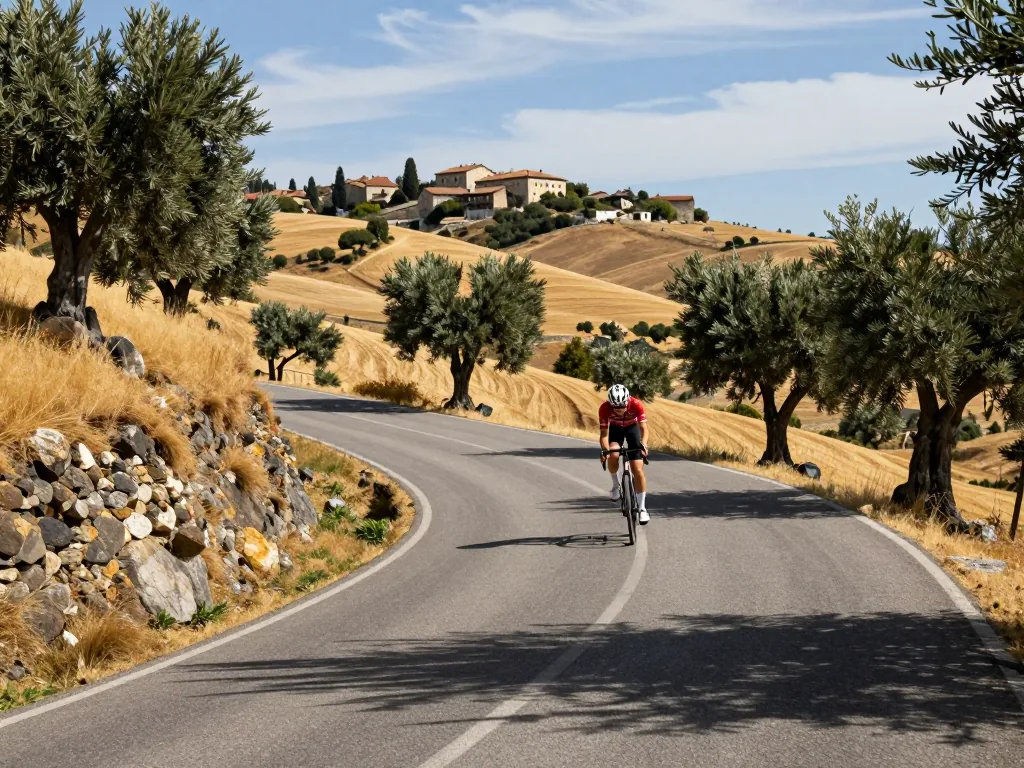
Forget flat. Forget easy. If your legs crave a challenge and your soul demands coastal views, the Costa Brava’s rugged terrain is the ultimate playground. This guide cuts through the tourist crowds to deliver the most epic hilly road cycling routes near Girona. Every climb rewards you with Mediterranean panoramas; every descent feels like a victory lap. Whether you’re a seasoned climber hunting for legendary ascents or a weekend warrior seeking a scenic but punishing workout, you’ll find detailed itineraries, gradient profiles, and insider tips to conquer these roads safely and spectacularly. Strap on your helmet, shift into your lowest gear—the real adventure begins now.
Understanding the Girona Cycling Landscape
Why Girona is a Global Cycling Hub
Girona didn’t stumble into its reputation as a cycling mecca. The city sits where the Mediterranean coastal plain meets the eastern Pyrenees, so you can roll out along flat, wind-swept roads by the sea and, within twenty minutes, be grinding up a 10% gradient in the Gavarres hills. With over 2,500 hours of sunshine a year and winter temperatures that rarely dip below freezing, the climate invites year-round riding. That’s why professional pelotons—think UAE Team Emirates and Lidl-Trek—set up their European winter base here. But the real draw is the density of quality climbs within a 50-kilometer radius. From the brutal, irregular ramps of Els Angels to the steady, lung-burning haul up Rocacorba, you can string together five distinct climbs in a single 100-kilometer loop without ever repeating a road. The old town, bisected by the turquoise Onyar river, is the natural epicenter. Most iconic routes begin with a 10–20 km warm-up along quiet, well-paved secondary roads that weave through cork oak forests and medieval stone villages, keeping traffic minimal and scenery maximal.
Essential Logistics: Getting There and Getting Around
Most riders fly into Girona-Costa Brava Airport (GRO), just 12 km south of the city center—a 15-minute taxi ride costing from €20 to €30 per trip. Alternatively, Barcelona-El Prat (BCN) works well, with a direct high-speed train to Girona taking about 38 minutes and costing from €25 to €45 per one-way ticket. Once in the city, you have two primary strategies. For a multi-day trip focused on the classic climbs, rent a car with a bike rack—budget from €45 to €90 per day, including insurance—to reach remote start points like Canet d’Adri or Les Planes d’Hostoles, where parking is free and roads are gloriously empty. That said, many of the best routes, including the Sant Gregori loop and the Anglès circuit, depart directly from the old town’s Plaça de la Independència, so a car is optional. For mechanical support, look for general bike workshops near the train station (Estació de Girona) or the main squares; you’ll find reliable tune-ups and spare parts (cassettes, chains, brake pads) without chasing specific brand names. Always carry at least two spare tubes and a mini-pump, as services are sparse once you’re on the climbs.
Preparing for the Climbs: Fitness and Equipment
What “Good Fitness” Really Means for These Routes
Let’s be honest: the Costa Brava’s hinterland is no place for casual Sunday spins. The routes here assume you can sustain 3–5 hours in the saddle with 1,500–2,500 meters of elevation gain, often packed into long, unbroken ramps. You should be comfortable holding a steady, purposeful effort at 75–85% of your functional threshold power (FTP) for 20–40 minutes—that’s the “grind zone,” where you’re breathing hard but can still string a sentence together. More critically, you need to handle short bursts above 15% gradient without panic. These pitches aren’t just steep; they’re often poorly surfaced and throw in tight switchbacks that punish hesitation. New to Girona? Start with the Els Angels loop—a classic 12 km climb from the city’s edge—before attempting Rocacorba. Els Angels offers an honest snapshot of your legs against a sustained 6–8% average, while Rocacorba’s final 3 km at 11%, with ramps touching 18%, will expose any weakness in pacing or gear choice. Build confidence on the former, then graduate to the beast.
Bike Setup and Gearing Recommendations
You don’t need a climbing-specific race bike, but you do need sensible gearing. A standard road bike with a compact crankset (50/34) and an 11-32 or 11-34 cassette is sufficient for every route listed here—provided you’re honest about your strength. For Rocacorba’s steepest sections, a 34/34 low gear is highly recommended; that combo lets you spin at 70–80 rpm instead of muscling a 39/28 and blowing up halfway. Running an 11-34? Consider a long-cage derailleur to keep shifting crisp. Tire-wise, use 25–28 mm with good puncture protection (e.g., Continental GP5000 or Vittoria Corsa Control). Many secondary roads—especially the climbs toward Santa Pellaia and the backside of Els Angels—have rough patches, loose gravel, and the occasional pothole. Wider tires at 80–90 psi (depending on your weight) will save you from flats and jarring descents. Always carry two water bottles (1L total minimum), a basic repair kit with two tubes and a CO2 inflator, and a windproof gilet. Mountain descents here can drop 8–10°C from the valley floor, and the wind off the Pyrenees is no joke; you’ll want that gilet for the long, fast drops back into Girona.
The Iconic First Climb: Els Angels Loop
Route Overview and Profile
Every local will recommend this ride first, and for good reason. It’s the perfect introduction to Girona’s hills without breaking your legs. Starting from the cobbled maze of the old town, you cross the Onyar River and head southwest, leaving the bustle behind on a smooth, well-signed road that gradually tilts skyward. The climb to the Santuario de los Ángeles runs roughly 8 kilometers, with an average gradient of a manageable 5–6%. But don’t be fooled. The final two kilometers deliver two sharp, exposed ramps pitching up to 9–10%, forcing you out of the saddle just as the sanctuary’s white walls appear. The full loop drops down the other side and returns via the quieter C-63 and the sleepy village of Quart, totaling about 35 kilometers with 650 meters of climbing. It’s compact and efficient—enough to raise your heart rate and get your legs used to the region’s rhythm, yet short enough for a long lunch afterward.
Practical Tips for the Ascent and Descent
Pacing is everything. The first three kilometers are a deceptive false flat; you’ll feel strong, maybe too strong. Resist pushing a big gear. Settle into a steady, conversational rhythm from the start, keeping your cadence high and your breathing controlled. The real fight begins when the road kicks up past the last farmhouse, and the hairpins near the sanctuary demand your easiest gear. Save your matches for those final two kilometers; you’ll need them to hold a straight line through the switchbacks without losing traction. On the descent, treat every corner with suspicion. The surface is generally good, but spring rains and fallen pine needles can leave gravel patches on the apexes, and the fast, sweeping bends can tighten suddenly. Brake early, look far ahead, and let the bike flow through the turns. On a clear day, the reward is immense: a panoramic sweep from the Mediterranean coast to the jagged silhouette of the Pyrenees. That view turns this from a training ride into a pilgrimage. It’s ideal for your first day—challenging enough to test your fitness, accessible enough to leave you wanting more.
The Beast: Rocacorba Climb
If the Costa Brava’s coastal rollers are a warm-up, Rocacorba is the exam. This isn’t a climb you stumble upon; it’s a pilgrimage for anyone who believes cycling is as much about suffering as scenery. Rising from the village of Canet d’Adri, just 15 km west of Girona’s cathedral spires, this 12.5 km ascent delivers 1,100 meters of vertical gain. The average gradient of 8.5% sounds manageable on paper—until you realise that averages are the great deceivers of road cycling.
Why Rocacorba is Considered the Hardest
The first 3 km are a gentle teaser, rolling at 4–6% through cork oak groves. Then the road snaps. From the 4 km mark to the 8 km mark, you’ll face sustained 10–12% pitches that never let you settle into a rhythm. Two specific ramps—one just past a cattle grid at kilometre 5.5, and another approaching a sharp left hairpin at kilometre 7.2—push past 15%. These aren’t switchbacks with a reprieve; they’re straight, brutal walls designed to break your spirit. The road itself is narrow, barely wide enough for a car, and in several sections, there are no guardrails—just a loose gravel edge and a long drop into the valley below. Add to that the occasional cattle grid that rattles your bike mid-effort, and you understand why pros like the Girona-based WorldTour riders treat this as a private torture test.
Strategy for Conquering the Steep Sections
The golden rule is restraint. Do not chase a Strava PR in the first 3 km; your legs will pay for it at kilometre 9. Settle into a gear that feels almost too easy, keeping your heart rate below threshold. When the gradient kicks at the 4 km mark, shift early and spin a low cadence of 60–70 rpm. Stay seated as much as possible—standing repeatedly will fatigue your lumbar muscles, and you’ll need your back strong for the final push. The last 1.5 km to the hermitage at the summit are the cruelest, with pitches that hover around 13–14% and no shade. Arrive here with a small reserve; you’ll need it for the final 200 meters, which feel vertical. The descent is a separate discipline: the hairpins are blind, the surface is patched and uneven, and a loose cattle grid sits right on a braking zone. Take it slow, use your whole lane, and never brake mid-corner. Rocacorba rewards respect—and punishes arrogance.
Rolling Hills and History: The Besalú Loop
Route Description and Elevation Profile
This is the quintessential Girona road ride—the one locals recommend to visitors seeking the region’s interior charm without the brutal Pyrenean climbs. Head north from Girona on the quiet C-66 alternate roads, threading through the flat, fertile Fluvià plains. For the first 20 kilometers, the terrain barely rises, lulling you into a false sense of ease. Then the road begins to undulate with a series of short, punchy climbs—each 2 to 3 kilometers long at a sustained 4 to 6% gradient. They aren’t leg-breakers, but they demand respect, especially after spinning a big gear on the flats. The real reward arrives just before Besalú: a sweeping descent into the Fluvià valley that drops you at the foot of the town’s famous Romanesque bridge. The outbound leg totals roughly 35 kilometers, and you’ll feel every one of the 400 meters climbed so far.
The return leg is a different beast. After crossing the bridge and circling the medieval core, you face a long, steady grind back to Girona—not steep, but a relentless 15-kilometer drag at a constant 3–4% gradient. It never hurts in any single moment, yet slowly saps your legs and spirit. The full loop spans 75–80 kilometers with 900–1,000 meters of accumulated climbing: a solid half-day outing.
Navigating the Return and Refueling Options
The return climb tests you mentally as much as physically. With the gradient never varying, your mind wanders and the road stretches endlessly ahead. Break it into five-kilometer segments. Pick a distant landmark—a white farmhouse, a specific tree line—and focus only on reaching that point before considering the next chunk. Maintain a high cadence (90+ rpm) in a small gear to spare your knees and keep your heart rate in check. Do not try to power through; you’ll pay for it in the final kilometers.
Besalú itself is well worth a stop. The iconic 12th-century Romanesque bridge with its fortified gate ranks among Catalonia’s most photographed sights, and the town’s cobbled lanes invite a brief wander. Several cafes in the main square serve espresso or Coca-Cola; I won’t name specific establishments—just follow the sound of espresso machines. But be warned: between Girona’s outskirts and Besalú, services are almost nonexistent. No gas stations, no bike shops, and only a handful of remote bars that may or may not be open. Carry at least two large bottles and a full complement of bars or gels for the outbound leg. Refuel properly in Besalú before starting the long slog home. Time it right, and you’ll roll back into Girona with the afternoon sun at your back—tired, but deeply satisfied.
Endurance Classic: Sant Hilari Sacalm via Coll de Revell
The Long, Steady Grind
If Rocacorba is the explosive sprinter’s test, the road to Sant Hilari Sacalm is the marathon runner’s canvas. Heading west into the heart of the Guilleries massif, this ultimate endurance route from Girona demands a different kind of respect. You won’t find the lung-bursting, 20% ramps that define other local climbs. Instead, the Coll de Revell pass—sitting at a modest 700 meters—is merely the gateway. The real work begins after the summit, as the road continues its relentless, undulating push toward Sant Hilari. Stretching roughly 20 kilometers from the Girona plain to the town square, the full climb holds a consistent 4–5% average gradient. That number feels benign on paper, but in the saddle, it’s a grinding, never-ending pressure that saps your legs and, more importantly, your mind. There are no switchbacks to offer a change of scenery, no flat sections to steal a breath—just a long, grey ribbon of tarmac tilting upward at a deceptively cruel angle. Settle into a rhythm early, tuck into the draft if you’re riding with a group, and ignore the temptation to push a big gear. This route punishes ego and rewards patience.
Training Benefits and Route Variations
For cyclists building a serious aerobic base, this is your holy grail. The sustained, sub-threshold effort is perfect for developing mitochondrial density and teaching your body to burn fat efficiently. It’s also an ideal playground for practicing sustained threshold efforts—hold a power output just below your functional threshold for 40 to 60 minutes, and you’ll feel the specific adaptations taking hold. To turn this into a true epic, don’t stop at Sant Hilari. Push on past the town and link up with the Coll de Bracons, a longer and slightly more demanding pass that adds another 15 kilometers of climbing and pushes the total loop past the 120-kilometer mark. The reward is a fast, sweeping descent back toward Girona, where you’ll fly through pine forests and open farmland. But beware: the upper, exposed sections of the descent are notorious for gusty crosswinds that can shove you into the gutter. Keep a firm grip on the bars and stay aero. Treat this as a self-supported expedition. Phone signal is patchy at best once you leave the outskirts of Girona, and services are scarce. Carry a full repair kit—two spare tubes, a tyre lever, a multi-tool, and a pump—plus enough food and water to get you through 4 to 5 hours of riding. A minor mechanical here can turn into a long, lonely walk if you’re unprepared.
Volcanic Terrain: The La Garrotxa and Olot Circuit
Short, Punchy Climbs on Quiet Roads
Around Olot, in La Garrotxa’s volcanic zone, the terrain shifts character: short, steep climbs of 1–3 km at 7–10% alternate with flat valley stretches. The roads here are remarkably quiet, threading through beech and oak forests, past volcanic craters and lava fields. The full loop from Girona and back runs about 100 km, but you can trim that by driving to Olot first—parking is free on most lots at the town’s edge, and you’ll spare your legs for the real work. These climbs owe their appeal to rhythm: rarely long enough to break you, yet steep enough to demand a standing effort each time. Surfaces are mostly smooth asphalt, with the odd gravel patch near farm entrances. Keep your eyes up—the eroded cone of Croscat volcano and the towering beech groves of Fageda d’en Jordà appear without warning, often just as you’re grinding up a 9% ramp.
Best Way to Structure a Day in the Volcanic Zone
Start in Olot and ride a figure-eight using local roads toward Santa Pau and Castellfollit de la Roca. The climbs are punchy, so treat them as intervals—attack each at 90% effort, then recover on the descents. The scenery is unlike anywhere else: black basalt cliffs, green meadows, and a volcanic past underfoot. A solid route heads south from Olot to Santa Pau (12 km of rolling terrain), then tackles the short, sharp ramp to the medieval castle before dropping into the valley. From there, push east to Castellfollit de la Roca, where the road hugs the edge of a basalt cliff dropping 50 meters to the Fluvià River—snap a photo, but don’t linger on the narrow shoulder. Loop back north on the quiet C-152u, which offers a gentle 3 km climb at 6% before a fast, sweeping descent into Olot. Total distance: 45–55 km, with 900–1,200 meters of climbing. Expect cooler air in shaded forest sections, even in summer—the dense canopy can drop temperatures by 5–8°C, so pack a lightweight gilet. Need a café stop? Santa Pau’s main square has two spots with strong espresso and local fuet, but bring cash—cards aren’t always accepted. For a longer day, extend the figure-eight toward Mieres or Sant Feliu de Pallerols, adding 20–30 km and two more categorized climbs.
Hidden Gem: Coll de Medes from Les Planes d’Hostoles
Route Details and Why It’s Underrated
Most visiting cyclists head straight for Rocacorba, but locals know better: they slip away to Coll de Medes, a quiet climb that punches well above its weight. Starting from Les Planes d’Hostoles, about 30 km west of Girona, the ascent offers 10 km of honest climbing at an average gradient of 6–7%. The middle section, though, is where it gets interesting—a sustained 3 km at 9–10% that forces you into a rhythm of deep breaths and careful gear selection just as your legs start to complain. The road surface is immaculate, with smooth asphalt and no potholes to dodge, and visibility is excellent on every switchback, so you can carry speed through corners with confidence. Traffic is almost non-existent, especially on weekdays, which is why Girona’s local riders favor it for a challenging workout without the parade of rental cars and selfie-stopping tourists that often crowd Rocacorba’s lower slopes. The summit itself is unassuming—a simple cattle grid and a few grazing fields—but the panoramic views over the Garrotxa volcanic region to the east and the Pyrenees to the north make the effort worthwhile. Bring a windproof gilet; the top can be breezy even on warm afternoons.
Combining Coll de Medes with Other Climbs
To turn this into a proper epic, link Coll de Medes with the neighboring Coll de Revell and the Sant Hilari loop. The full circuit runs about 130 km with over 2,500 meters of climbing—a serious day in the saddle. From the Medes summit, the descent toward Amer is fast and technical, with tight switchbacks that reward confidence and punish hesitation. Keep your weight back and let the bike run. Once you hit the valley floor, quiet lanes lead to the base of Coll de Revell, a shorter but punchier climb averaging 8% for 6 km. From there, the road winds through cork oak forests and past the medieval town of Sant Hilari Sacalm before looping back toward Les Planes. Attempt this on a weekday; weekend traffic from Barcelona adds a handful of cars to the lower sections, though it never approaches coastal chaos. Carry two full bottles and a few bars—services are sparse between towns, and the only café worth stopping at is in Sant Hilari’s main square, serving excellent espresso and homemade tortilla. Time it right, and you’ll roll back into Les Planes as afternoon shadows lengthen, with a well-earned sense of having conquered one of Girona’s best-kept secrets.
Advanced Route Planning and Safety
How to Link Multiple Climbs into a Multi-Day Plan
Girona’s cycling magic isn’t any single climb—it’s how these giants stack into a week of unforgettable suffering. For a 3–5 day trip, don’t hammer every ascent daily. Alternate hard days with deliberate recovery. A proven template: Day 1 is the Els Angels loop, a 20-kilometre circuit from the city’s edge climbing 600 metres—ideal for acclimatising your legs and checking your gearing. Day 2 is the queen stage: Rocacorba, a 10-kilometre beast averaging 9% with ramps above 20%. Give it everything, but plan on needing the next day off. Day 3 isn’t a rest day—it’s active recovery along the flat coastal road to Palamós, where you spin easy gears and let the Mediterranean breeze flush lactate from your quads. Day 4 returns to hills with the Besalú loop, an 80-kilometre route with rolling terrain and two shorter climbs that test endurance without breaking you. Day 5 finishes long: either Sant Hilari Sacalm’s steady 15-kilometre drag or La Garrotxa’s volcanic landscape, where you grind over modest pitches for 120+ kilometres. Check the weather forecast twice before any morning start. Summer thunderstorms in the Pyrenean foothills arrive terrifyingly fast—blue skies can turn black in 20 minutes, and lightning on exposed ridges is a real risk. If the barometer drops, shorten your route or start at dawn.
Navigating, Traffic, and Emergency Preparedness
Download offline maps (Komoot or Ride with GPS) before leaving the hotel—mobile signal vanishes in the valleys below Rocacorba. Use a handlebar mount and a small power bank; long days drain your phone. Traffic is generally light on mountain roads, but the coastal stretch to Palamós gets busy with campervans from 10 am onwards. Ride single-file there and use rear lights even in daylight. Carry a basic repair kit with two spare tubes, a multi-tool, and a mini pump, plus a small first-aid pouch with antiseptic wipes and a space blanket. For emergencies, save 112 and a Girona-based taxi service with bike racks—typically €30 to €60 per transfer. Finally, tell someone your planned route and expected return time each morning. The climbs are epic, but the real victory is getting back to Girona’s tapas bars in one piece.
Frequently asked questions
What makes the hilly routes near Girona ideal for road cycling?
The area offers a mix of well-maintained, low-traffic secondary roads, rolling foothills of the Pyrenees, and the volcanic zone of La Garrotxa, providing varied climbs and descents. The Mediterranean climate means you can ride most of the year, with crisp mornings and warm afternoons, though summer afternoons can be hot.
What is the most famous classic climb in the region?
The climb to Els Angels (Santuario de los Ángeles) is the iconic local ascent, starting from the outskirts of Girona and rising about 400 meters over 8 kilometers with steady gradients. It offers panoramic views of the city and the Bay of Roses, and it’s a staple for both locals and pros.
Are there routes suitable for intermediate riders, not just pros?
Yes, many loops combine a moderate climb like the Coll de Medes or the Rocacorba approach (but not the full summit) with flatter valley sections. For example, a 60–70 km loop through Celrà, Bordils, and Sant Joan de Mollet includes rolling hills and a few short ramps, perfect for building endurance without extreme gradients.
What is the Rocacorba climb like, and is it recommended for everyone?
Rocacorba is a brutally steep, narrow climb (averaging 9-10% with ramps over 20%) that gains about 700 meters in 8 km, ending at a hermitage with a dead-end road. It’s only recommended for experienced climbers with compact gearing; beginners should skip it or stop at the lower viewpoint.
Which route offers the best combination of scenery and moderate difficulty?
The loop from Girona to Besalú via Sant Julià de Ramis and Banyoles is a favorite, covering about 90 km with rolling hills and a steady climb up to the Coll de Canet (around 5-6% average). You’ll pass medieval villages, the lake of Banyoles, and the Fluvià river valley, with a fast descent back toward Girona.
How do I handle navigation on these routes, given many small side roads?
Most routes are well-signed with regional cycling route markers (like the Girona Greenways or local ‘Cicloturisme’ signs), but it’s wise to download a GPX file from local cycling clubs or use a bike computer with a map. Avoid relying solely on phone GPS in remote valleys, as signal can drop, and always carry a paper cue sheet as backup.
What is the best time of year to ride these hills for optimal conditions?
Spring (April–June) and autumn (September–October) offer mild temperatures, fewer tourists, and less wind, making them ideal for long climbs. Winter days can be sunny but cold at elevation, with occasional frost on shaded descents, while July and August are very hot, so start early (by 7 AM) to beat the heat.
Are there any specific safety concerns on these hilly routes?
Watch for loose gravel on tight switchbacks, especially on lesser-used climbs like Rocacorba or the Col de Sant Iscle, and be cautious of livestock or farm vehicles on narrow lanes. Also, some descents have sharp bends with poor visibility, so brake early and stay right; helmets are mandatory in Spain.
Can I combine these routes with a visit to natural parks or cultural sites?
Absolutely—many climbs pass through the Garrotxa Volcanic Zone Natural Park, where you can see dormant volcanoes and beech forests, or near the medieval town of Besalú with its Romanesque bridge. Plan a stop at a local café in a village like Sant Joan les Fonts or Mieres for a coffee and a look at Romanesque churches.
What kind of gearing or bike setup is recommended for these climbs?
A standard road bike with a compact crankset (50/34) and an 11-32 or wider cassette is sufficient for most routes, but for Rocacorba or the steepest ramps of the Col de Medes, a 34/34 or even a 34/36 is a lifesaver. Ensure your brakes are in top condition, as descents are long and technical, and consider wider tires (28mm) for better grip on rough sections.