Conquer Rocacorba on Two Wheels and Earn the Best Views in Catalonia
Think you can handle Rocacorba? This mountain bike tour up Catalonia’s toughest climb rewards you with epic views. Ready to earn them?
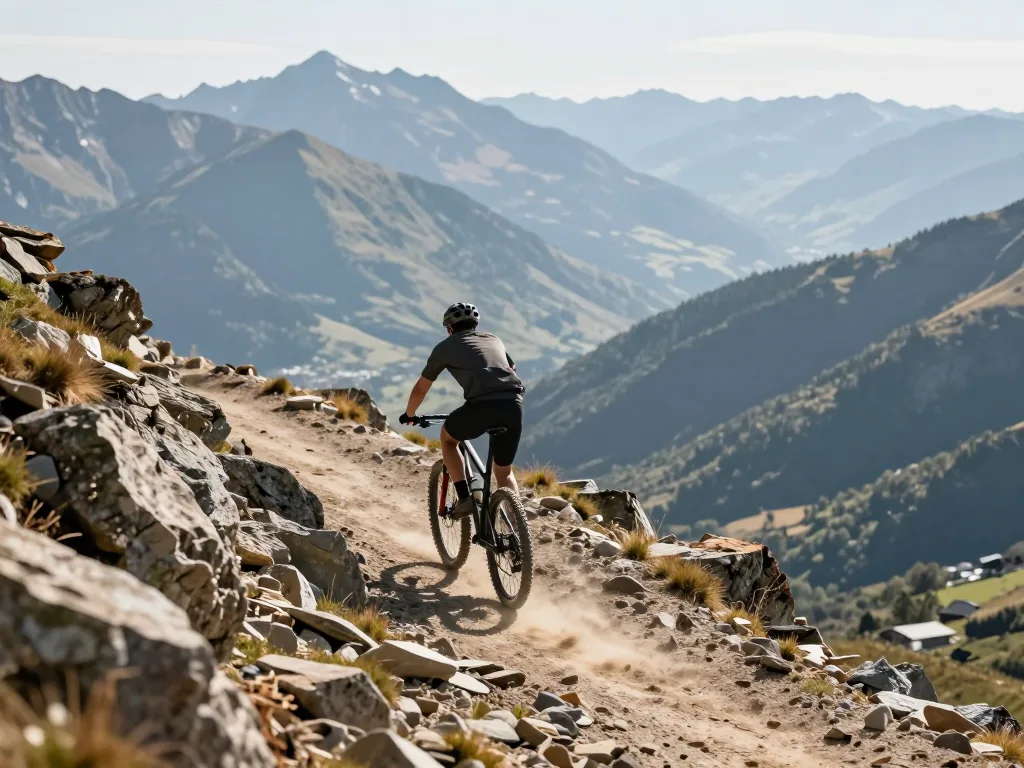
You’re probably wondering if a mountain bike tour up Rocacorba is worth the burn. Trust me, it is. This isn’t just another climb. It’s a gritty, rocky test that drops you at a summit with views that make Catalonia look like a painting. I’ve done the ride. I’ve felt the quads scream. And I’ve stood at that hermitage catching my breath while the whole province spread out below. So grab a coffee, and let me walk you through the trail, the gear you’ll need, and the exact spots to stop for photos that’ll make your friends jealous. By the end, you’ll know if this adventure is for you—and how to nail it without pushing your bike the whole way.
What Makes the Rocacorba Mountain Bike Tour So Special
Looking for a ride where every pedal stroke pays off with incredible views? This is it. The mountain bike tour up Rocacorba isn’t just a workout—it’s a full-on adventure. You get gritty climbs, forested singletrack, and a summit that feels like the top of the world. Sure, you’ll earn every switchback. But the payoff? Absolutely worth the burn.
Why riders from all over come to this Girona peak
There’s something magnetic about Rocacorba. Cyclists flock here from every corner of the globe. It’s not just the climb, though that’s a big part of it. The mountain stands like a guardian over the Girona plains, and its silhouette is instantly recognizable to anyone who’s scrolled through cycling photos online. Riders come because this is a bucket-list ascent—pure and simple.
But the real draw? Variety. You won’t just grind up a boring paved road. The tour mixes gravel sections, rocky paths, and smooth dirt trails that keep your brain as engaged as your legs. Plus, the local riding community treats Rocacorba almost like a pilgrimage. You’ll see other riders on the way up, exchange a nod or a quick “bon dia,” and share that unspoken bond of suffering together. That camaraderie makes the whole experience feel special, even if you’re riding solo.
And let’s be honest—the bragging rights are huge. Saying you conquered Rocacorba on a mountain bike carries weight in any cycling conversation. It’s one of those rides you’ll talk about for months. For good reason.
What you will see from the top on a clear day
The summit is where the magic really happens. On a clear day, you get a panoramic view that stretches for what feels like forever. To the east, the Mediterranean Sea glimmers on the horizon—a thin blue band that looks almost painted. To the west, the Pyrenees rise up, their peaks often dusted with snow even in late spring. It’s the kind of vista that makes you forget how hard the climb was. At least for a few minutes.
You’ll also see all of Girona laid out below you, with its cathedral and old town walls looking like a model village. Patchwork fields, olive groves, and cork oak forests spread out in every direction. You can even trace the winding roads you might have ridden to get here. It’s a moment that begs for a photo, so don’t forget to stop and soak it in.
Here’s what you can typically spot on a crystal-clear day:
- The Mediterranean coastline, from the Bay of Roses to the Costa Brava’s jagged cliffs
- The volcanic zone of La Garrotxa, with its extinct cones and lush green valleys
- The peaks of the Pyrenees, including the iconic Canigou on the French border
Bring a snack and just sit there for a while. Trust me, you’ll want to.
How hard is the climb really for a first-timer
Let’s be real: it’s tough. But “tough” doesn’t mean impossible. If you’ve done a few mountain bike rides and have a reasonable base fitness, you can absolutely make it to the top. The key is pacing. The climb from the village of Canet d’Adri is around 12 kilometers, with an average gradient that hovers in the double digits for the last few kilometers. That final stretch is relentless. But it’s also where the trail gets more technical, so you’ll be focusing on line choice rather than just grinding.
For a first-timer, the biggest challenge is mental. There will be moments where your legs scream and your lungs burn. You might wonder why you ever thought this was a good idea. But here’s the thing: you can stop. No shame in taking a breather, having some water, and looking back at how far you’ve come. The switchbacks give you natural rest points, and the views just keep getting better as you rise.
Realistically, plan for two to three hours of steady climbing, depending on your pace and how often you stop. The descent is a reward in itself—fast, flowy, and technical in places, so keep your hands on the brakes and your eyes on the trail. If you’re nervous, start early in the morning when it’s cooler and there’s less traffic on the road sections. And if you’re really unsure, you could hire a local guide for the day—prices for a guided mountain bike tour in the area typically range from €60 to €120 per person, which includes route knowledge and often a support van. That said, many riders do it self-guided with a GPS file and a sense of adventure. Either way, you’ll finish with a huge grin and a story worth telling.
Getting Ready for the Ride Up Rocacorba
So you’ve decided to tackle Rocacorba on a mountain bike—good call. This isn’t just any climb; it’s a legendary beast. On a clear day, the views stretch all the way to the Pyrenees. But before you clip in and start grinding, sort out your gear, your gearing, and your game plan. Let’s break it down so you can focus on the fun part: the descent.
Choosing the right bike for the paved and gravel sections
First things first—what are you riding? Rocacorba starts on smooth tarmac, then throws a curveball with rough gravel near the top. A hardtail mountain bike works great here, especially one with around 100–120mm of front travel. It’s light enough for the paved lower slopes but forgiving when the surface turns to loose rock and packed dirt. Got a full-suspension rig? Don’t worry—you’ll be a bit slower on the road, but the comfort pays off on the bumpy stuff.
Now, what about a gravel bike? Sure, you could make it work. But the final kilometers get steep and rocky, and you’ll want that low-end traction and wider tires. A mountain bike gives you the confidence to pick your line without skittering sideways. Here’s a tip: skip the road bike. The washboard sections will rattle your wrists and make you regret life choices. Stick with knobby tires—something in the 2.2 to 2.4-inch range—and you’ll be smiling all the way to the summit.
| Ride Section | Surface Type | Best Bike Choice | Tire Pressure (approx.) | Key Challenge |
|---|---|---|---|---|
| Lower climb (0–5 km) | Smooth tarmac | Hardtail or gravel bike | 25–30 psi | Keeping a steady rhythm |
| Middle switchbacks | Mixed tarmac and dirt | Hardtail with front suspension | 24–28 psi | Cornering on loose edges |
| Upper gravel kicker | Loose rocks and ruts | Full-suspension or hardtail | 22–26 psi | Traction on steep pitches |
| Descent back down | All of the above | Same as ascent | Same as ascent | Brake control and line choice |
Gearing, tires, and what to pack in your backpack
Let’s talk about the climb itself—it’s relentless, with ramps that hit double-digit gradients. You want a compact setup: a 1x drivetrain with a 30 or 32-tooth chainring up front and a wide-range cassette out back, like an 11-50 or 10-52. That gives you a bailout gear for the steepest sections without spinning out on the flatter parts. On a 2x system? Make sure your lowest gear is low enough—think 34×36 or easier. Trust me, you’ll thank yourself when your legs are screaming.
Tires? Go tubeless if you can. It’s a lifesaver on the rocky upper section, where a pinch flat can end your day. Pair that with a small pump or CO2 inflator, a spare tube, and a multi-tool. As for your backpack: two large water bottles (or a hydration bladder), some quick carbs like gels or a banana, a light windbreaker for the descent, and your phone. The summit can be windy, even when the valley is calm. And don’t forget sunscreen—the exposure up top is no joke.
Starting from Canet d’Adri and finding a place to park
Your adventure kicks off in the small village of Canet d’Adri, at the base of Rocacorba. It’s charming, but parking is limited, so arrive early. You’ll find a few free spaces near the village square and along the main road—just make sure you’re not blocking any driveways. Full? There’s a small gravel lot on the outskirts, about a five-minute pedal from the start of the climb. Don’t leave valuables visible in your car; keep it simple and lock everything in the trunk.
Once you’re parked, warm up on the flat roads before the gradient kicks in. The climb officially starts just past the village, and you’ll see the road winding up the forested hillside. It’s a steady, unrelenting push, but the first few kilometers are forgiving enough to find your rhythm. After that, it’s just you, the bike, and the mountain. And when you finally roll onto the summit plateau, with the hermitage and the 360-degree panorama in front of you, you’ll know exactly why this ride is worth every drop of sweat.
Riding the Route Step by Step From Village to Summit
So, you’ve decided to take on Rocacorba. Good call. This isn’t just a bike ride; it’s a pilgrimage for anyone who loves a good climb and a ridiculous view at the top. You’ll start in the sleepy village of Canet d’Adri, and from the first pedal stroke, you’ll understand why this mountain is a local legend. Let’s break down the ride so you know exactly what’s coming, gear up properly, and save some energy for that final stretch.
The first few kilometers on the narrow paved road
You’ll roll out of Canet d’Adri on a quiet, narrow ribbon of asphalt that winds gently through farmland. Don’t let the calm start fool you—the gradient picks up quickly. The first few kilometers are a steady, unrelenting climb, but the surface is smooth and forgiving. You’ll pass old stone farmhouses and hear the occasional dog bark from a distant yard. Keep your cadence easy and your breathing steady. This is the warm-up, but it’s also where you learn the rhythm of the mountain.
The road is tight, and there’s almost no traffic, but you’ll still want to stay alert. The views start to open up behind you, revealing the green plains of the Girona region. That’s your reward for the early effort. As you gain height, the air gets a little cooler and the silence gets deeper. You’ll start to see the rocky peak of Rocacorba itself, jutting out above the treeline, and it suddenly feels very real. Don’t sprint here. Just spin, drink some water, and settle in for the long haul.
When the pavement ends and the gravel takes over
Just when you think you’ve found a rhythm, the tarmac disappears. The transition is abrupt, and suddenly you’re on a rough, rocky gravel track that demands your full attention. This is where the mountain bike earns its keep. The gradient kicks up again, and the loose stones make every pedal stroke a little slippery. You’ll want to drop your saddle slightly and shift your weight back to keep the rear wheel planted. Pick a line, look ahead, and don’t be afraid to zigzag a bit to find the grippy bits.
This section is a proper workout. It’s steep, it’s bumpy, and it goes on longer than you expect. But here’s the thing—the forest around you is magical. Cork oaks and pines shade the path, and the only sounds are your tires crunching and your own breathing. If you need to, get off and push for a few meters. No shame in that. Just remember to enjoy the fact that you’re deep in the Catalan countryside, far from any road. The gravel section is the heart of the challenge, and it’s where you really earn the summit.
Reaching the Ermita de Santa Afra and the final push
Finally, the trees part and you roll up to the Ermita de Santa Afra, a tiny hermitage clinging to the mountainside. This is a natural break point. Stop here, catch your breath, and look out over the whole Empordà plain. You’re close now, but the last section is a beast. From the chapel, the trail turns into a steep, rocky singletrack that seems to go straight up. It’s technical, with loose rocks and a few sharp switchbacks that will have you questioning your life choices. Keep your momentum, use your lowest gear, and stay focused.
The final push is short but brutal—maybe a kilometer of pure grunt work. Just when your legs are screaming, the summit plateau opens up. You’ve made it. The view is absurd: the Pyrenees to the north, the Mediterranean to the east, and the whole of the Girona countryside spread out below you like a map. Take a moment, eat a snack, and soak it in. You didn’t just ride a bike; you conquered a mountain. And the descent? Well, that’s a whole other story.
The real secret to Rocacorba is patience—ride within yourself on the gravel, and the summit will always come to you.
- Check your brake pads before you start; the descent is long and you’ll need them.
- Carry at least two bottles of water and a light jacket—the summit wind is no joke.
- Bring a small repair kit with a spare tube and tire levers; the rocky sections are unforgiving.
Handling the Descent and Making the Most of Your Day
You’ve earned the summit, and the views are incredible. But here’s the honest truth: the ride down Rocacorba is where the real adventure begins. It’s easy to get caught up in the thrill of flying downhill, but this trail punishes overconfidence. So, take a few minutes to reset your mindset and check your bike before you roll. That little pause makes the difference between a legendary descent and a sketchy one.
Why the ride down demands more respect than the climb
The climb up Rocacorba is a steady, grinding effort that lets you settle into a rhythm. The descent, though? Completely different beast. Gravity turns every loose stone and off-camber corner into a test of your focus. You’re not just rolling back down – you’re navigating a technical trail that drops over 1,000 meters in a short distance. And the gradient gets steeper in places than you’d expect.
Your body is also tired from the ascent. That means slower reaction times and arms already fatigued from gripping the bars. So treat the ride down as its own workout, not just a reward. Shift your weight back, keep your elbows loose, and stay off the front brake. The trail rewards smooth, deliberate inputs over panicked braking. And remember, you can always stop and walk a section if it feels too hairy. No shame in that when the alternative is a long, painful hike out.
Tips for loose gravel, steep switchbacks, and hikers
Rocacorba’s upper slopes are covered in loose gravel that shifts under your tires like ball bearings. On the steep switchbacks, this gets trickier because you’re braking while turning – a recipe for washing out the front wheel. The key? Brake hard in a straight line before the corner, then release the brakes and lean the bike through the turn. Look where you want to go, not at the edge of the trail.
You’ll also share the path with hikers, and they often walk right in the middle of the track, especially on weekends. Give them plenty of space and slow down well in advance. A friendly “hello” or a bell ring works wonders. Here’s a quick checklist for keeping control:
- Drop your saddle slightly before the loose sections for more maneuverability.
- Use your rear brake more than the front on gravel to avoid skids.
- Stand up on the pedals with knees bent to let the bike move beneath you.
- If you feel the rear wheel slide, ease off the brake gently – don’t grab it harder.
Where to stop for a break and how to plan your return
Halfway down, you’ll find a small clearing near the treeline where the trail flattens out for a few hundred meters. It’s a natural spot to catch your breath, drink some water, and check your brake pads for wear. The views here are still fantastic, but they’re more about the forest and the rock walls than the sweeping valley below. Don’t skip this stop – your hands and shoulders will thank you later.
When you reach the bottom, you’ll be back at the small parking area near the trailhead. From there, plan your return based on how much energy you have left. Feeling strong? Loop back through the neighboring villages on quiet country roads for an extra hour of riding. Spent? It’s a short, flat pedal back to the main road where you can grab a coffee in the nearest town. Either way, leave yourself enough daylight. The forest gets dark quickly in the afternoon, and you don’t want to be navigating loose rocks by headlamp.
The best riders on Rocacorba aren’t the fastest – they’re the ones who brake early, look far ahead, and never forget that the mountain is in charge.
Ready to Ride
So there you have it. A mountain bike tour up Rocorba? It’s not just a workout. It’s your ticket to views that make you forget you’re pedaling at all. Sure, you’ll earn every switchback. But that summit panorama over the Pyrenees and the Mediterranean? Worth the burn. Totally. If you’re even slightly tempted, grab some water, check your brakes, and point your wheels toward the trailhead. The mountain’s been waiting. Why put it off? Go on—give it a spin.
Frequently asked questions
How hard is the climb up Rocacorba on a mountain bike?
It’s a serious leg-burner, no sugarcoating it. You’re looking at a steady grind with some steep pitches that’ll have you in your easiest gear, but it’s totally doable if you’re fit and pace yourself.
What kind of mountain bike do I need for this tour?
A hardtail with good tires is fine, but a full-suspension bike makes the rocky descent way more comfortable. Just make sure you’ve got a low enough gear for the steep stuff—something with a 32-tooth chainring and a wide-range cassette works great.
How long does the whole tour take, including breaks?
Plan for about 4 to 6 hours round trip, depending on how many times you stop to soak in the views and catch your breath. The climb alone can take 2 to 3 hours, and the descent is quicker but you’ll want to pause for photos.
Is the trail well-marked, or will I get lost?
The main route is fairly clear, but there are a few junctions where you could easily take a wrong turn. Grab a GPX file for your phone or bike computer—it’s a lifesaver, especially when the trail splits near the top.
What's the surface like on the way up?
You’ll ride a mix of smooth dirt road, rocky singletrack, and some loose gravel sections. The lower part is pretty forgiving, but higher up it gets chunkier, so keep your weight back and pick your line carefully.
Do I need to carry water, or are there refill spots?
There’s no reliable water on the mountain, so you need to carry everything you’ll drink. Bring at least 2 liters, and if it’s hot, 3 liters—you’ll thank yourself when you’re sweating on the switchbacks.
Is the descent scary for a beginner mountain biker?
It can be intimidating, honestly, because there are some exposed rocky sections and tight corners. If you’re not confident, walk the sketchy parts—there’s no shame in that—and you’ll still have a blast on the smoother lower trails.
What's the best time of day to start the tour?
Start early in the morning, like right after sunrise, to beat the heat and catch the light on the cliffs. You’ll also avoid the afternoon winds that can whip up on the summit, which makes the climb feel a lot harder.
Are there any fees or permits needed to ride up Rocacorba?
Nope, the trail is free and open to the public, so you just need to show up and ride. If you park in the village at the bottom, you might pay a small parking fee, usually around 2 to 5 euros for the day.
What should I pack in my backpack for this ride?
Bring a spare tube, tire levers, a mini pump, and a multi-tool—flats happen on those rocky bits. Also toss in a light jacket for the top, some snacks like nuts or a bar, and a basic first-aid kit just in case.