Conquer Costa Brava Climbs: The Ultimate Girona Road Bike Guide for Intermediate Riders
Conquer Costa Brava climbs with this Girona road bike guide for intermediate riders—routes, tips, and epic scenery for your next tour.
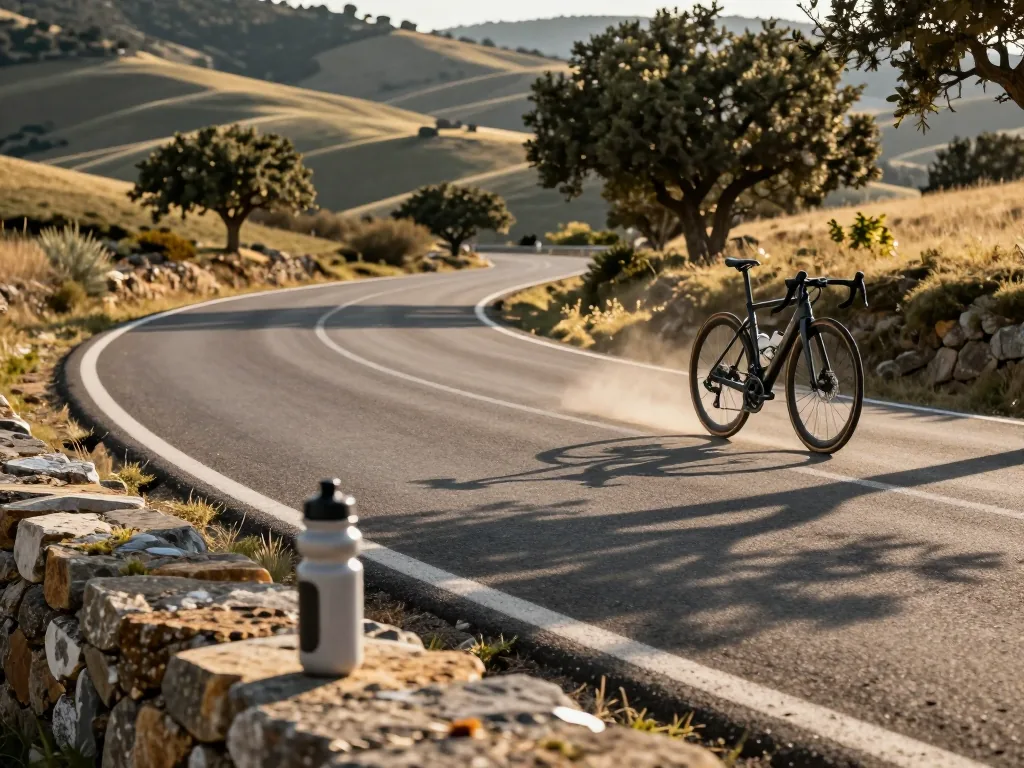
Forget crowded spin classes and predictable local loops. The real test of your cycling legs awaits in the volcanic hills and Mediterranean cliffs of Spain’s Costa Brava. This guide is crafted specifically for intermediate riders who have outgrown flat terrain but aren’t ready for pro-level Alpine passes. You’ll find a curated selection of challenging yet achievable climbs around Girona, blending breathtaking coastal views with rolling inland ascents. Insider tips on pacing, gear, and the best café stops for refueling are included. By the end, you’ll have a foolproof week-long plan to conquer these legendary roads with confidence—turning a simple vacation into your most memorable cycling achievement yet.
Getting Oriented and Planning Your Base
Your first decision—where to sleep—will shape every ride you take. For most intermediate riders, Girona city itself is the obvious anchor. The old town’s narrow, cobbled lanes might feel intimidating with a road bike, but within ten minutes of pedaling from the cathedral’s shadow, you’ll find a flat, modern grid of wide avenues, roundabouts, and dedicated cycle lanes that funnel you safely toward the countryside. The city offers an unmatched density of bike shops (several with full service and rental fleets), coffee stops that open before dawn, and hotels that expect you to track in cleats and chamois. If you prefer silence over convenience, consider Pals, a hilltop medieval village about forty minutes south. From Pals, you roll straight into rolling farmland and the Baix Empordà’s quiet lanes, but you’ll need to drive or ride a longer warm-up to reach the serious climbs around Girona’s northern ranges.
Time your trip for April through June, or September through October. Those windows give you crisp mornings, warm afternoons, and, crucially, fewer camper vans and tour buses on the winding mountain roads. July and August are hot and crowded; November through March often brings rain and occasional icy patches in the higher Coll de Bracons area. For arrival, fly into Girona–Costa Brava Airport (GRO), which sits just a fifteen-minute taxi or bus ride from the city center. If you’re coming from Barcelona, the AVE high-speed train lands you at Girona’s modern station in under forty minutes—bikes travel free if boxed, and the station is a flat, easy roll to most central hotels.
Once you’re settled, build your daily rhythm around the Ruta del Carrilet. This former railway line, now a wide, flat gravel-and-asphalt path, runs south from Girona toward Olot and Sant Feliu de Guíxols. It’s your traffic-free escape hatch: ride it for ten kilometers, and you’ll pop out at the base of the first serious ramps without ever sharing a shoulder with a truck. From there, link to the smaller, paved farm roads that thread between vineyards and cork oaks. A practical habit: each evening, plot one loop that starts and ends on the Carrilet, with a single big climb in the middle. That way, your legs are fresh for the ascent, and the return leg is a gentle spin back to town, not a white-knuckle descent into rush hour. Keep your base flexible—two nights in Girona, then two in Pals—and you’ll cover both the northern volcanic hills and the southern coastal ridges without ever feeling rushed.
Understanding the Terrain and Your Fitness Level
What “Intermediate” Really Means on Girona Roads
Before you pin on a number or even fill a bidon, be honest with yourself. This is not a flat, café-crawl region. A typical Girona road bike tour for intermediate riders means daily distances of 60 to 100 kilometers, paired with 800 to 1,500 meters of climbing. You will not find a single, monotonous pass. Instead, you face a mosaic of rolling hills, short ramps that spike above 10%, and longer mountain ascents that demand rhythm. You must hold a sustained effort for 20 to 30 minutes on 5 to 8% gradients without blowing up. Equally crucial is your descending skill. The roads are old, often narrow, and the switchbacks are technical. You need the confidence to brake late, lean into corners, and hold your line while a van might come the other way. If climbing is your weakness, you will suffer; if descending makes you tense, you will lose time and joy.
The Three Main Climbing Zones
Forget conquering everything in one ride. The key to a successful tour is understanding the three distinct climbing personalities around Girona, then choosing one as your daily centerpiece.
The Gavarres are the hills closest to the city. They offer punchy, undulating routes that never quite settle. The pavement here is often rough and cracked, demanding attention and a slightly heavier gear. The climbs are short—often 3 to 6 kilometers—but relentless, with false flats that sting. They are perfect for a hard, three-hour morning loop.
Rocacorba is the legend. Longer, steeper, and far more intimidating, its average gradient is punishing. But the real story is the middle section, which kicks up brutally and seems to go on forever. This is a climb you dedicate a full day to, not a casual add-on. You must pace yourself mentally as much as physically.
Els Àngels offers the most forgiving introduction to the region’s bigger climbs. It is a steady, well-paced ascent on a wide, smooth road leading to a hermitage perched high above the plains. The gradient is constant rather than explosive, allowing you to find a spinning rhythm. The payoff is a panoramic view stretching to the Mediterranean.
A smart intermediate plan is simple: build your route around one primary climb. Pair Els Àngels with rolling connector roads for a solid 80-kilometer day. Tackle the Gavarres for a punchy, power-focused session. Save Rocacorba for a day when your legs are fresh and your mind is ready for a fight. Trying to link all three in one outing is a recipe for a blow-up, not a memorable tour.
Route Design for a 3 to 5 Day Tour
The key to a successful multi-day Girona trip is alternating intensity with recovery, letting the terrain tell a story. Over three to five days, structure each ride as a distinct chapter, gradually increasing difficulty before a final celebratory loop. Here is a proven framework, adaptable to your fitness and the weather.
Day Loop South to the Coast via the Carrilet
Start with a leg-stretcher that eases you into the region’s rhythm. From Girona, pick up the Carrilet, a converted rail trail running flat and traffic-free toward Sant Feliu de Guíxols. This is your warm-up: a smooth, gentle spin through cork oak forests and river valleys, letting your legs wake up without early demands. After about 35 kilometers, you’ll hit the Mediterranean. Reward yourself with a coffee and a look at the fishing boats before turning inland. The return is the real workout—a series of short, punchy climbs through the Gavarres massif, where the asphalt narrows and the forest closes in. The roads are quiet, the gradients manageable, and the descent back toward Girona is fast and flowing. This loop totals roughly 90 kilometers: a flat start, a coastal reward, and a hilly comeback that builds confidence without breaking you.
Day Loop North and West to Rocacorba
On day two, head north on quiet lanes weaving through farmland and small hamlets. Your objective is Rocacorba, the region’s most iconic climb. The approach is gradual, but the final five kilometers are serious: steep ramps, tight switchbacks, and a surface demanding attention. This is a day for testing your legs, but also for pacing. The climb runs roughly 12 kilometers from the base, and the reward is a panoramic view of the Pyrenees and the Mediterranean on a clear day. After the descent—technical but exhilarating—loop back through the plains, passing villages like Sant Miquel de Campmajor and Porqueres, where you can refill bottles at a fountain. This 75–85 kilometer day has one major climb and a long, gentle tailwind home, making it ideal for measuring your progress after the easier coastal loop.
Day Loop to Els Àngels and the Medieval Villages
Your final or middle day should be the longest, combining a classic ascent with cultural sightseeing. Start with the Els Àngels climb, a steady 8-kilometer drag from the city that never feels brutally steep but always tests your endurance. At the top, the monastery offers a café with a terrace. From there, descend toward the plains and detour to the medieval hilltop town of Pals, with its cobbled streets and stone archways. The terrain becomes rolling, and the asphalt quality varies—smooth in some stretches, broken and patched in others, so keep your hands loose on the bars. Between Pals and the return route, you can also pass through Peratallada and Monells, both photogenic and quiet. Expect 80–100 kilometers with a mix of climbing and false flats, and plan for at least two long café stops in historic squares. This day is as much about the journey as the riding, so carry a lock and take your time.
Navigation, Road Surfaces, and Traffic Awareness
Using Landmarks and Maps Without GPS Reliance
The Costa Brava’s interior is a labyrinth of twisting asphalt. GPS is a handy companion, but deep valleys and dense pine forests can swallow a signal without warning. For the intermediate rider, stress-free touring comes from anchoring your mental map to a few unmissable landmarks. The Cathedral of Girona, perched on its hilltop, is your northern compass point. The Onyar River, snaking through the old town, guides you out of the urban maze. As you climb southwest, the hermitage at Els Àngels—a white stone sanctuary visible for miles—marks the gateway to the higher passes. To the east, Sant Feliu de Guíxols, with its distinctive monastery and harbor, serves as your salt-air finish line. Before you roll out, print or download offline maps of the Gironès and Baix Empordà regions, and always tuck a paper cue sheet into your jersey pocket. Even if your phone dies, a handwritten list of town names and junction numbers will see you home.
What to Expect on the Tarmac
These roads are not the billiard-smooth ribbons of the Tour de France. Many are narrow, single-lane affairs where the center line has long faded and the edges crumble into gravel. Expect occasional farm tractors hauling trailers, and the rare but real delivery van squeezing past on a blind curve. Lesser-used climbs—like the ascent to Sant Grau or the backside of Romanyà de la Selva—often feature rough patches, cracked tarmac, and scattered debris: pine needles, small stones, the occasional wild boar crossing. Ride defensively from the first pedal stroke. Position yourself a meter from the edge to avoid drain grates and potholes, and never assume a driver sees you just because you hear them. Wear bright, high-contrast clothing and run a rear light even in full sun; the dappled shade under cork oaks makes you invisible until the last second. When you hear a car approaching from behind on a twisty section, pull over decisively and let it pass—there is no shame in pausing at a wide spot. On descents, brake before the corner, not in it, and keep your eyes scanning for the telltale glint of a mirror reflecting through the trees. The reward for this vigilance is solitude: miles of empty, silent climbs where the only sound is your chain and the wind in the holm oaks.
Fueling, Hydration, and Daily Logistics
Nutrition Strategy for Multi-Day Efforts
On a multi-day Girona road bike tour, your body needs consistent, quality fuel. Start each morning with a solid breakfast—eggs, toast with olive oil and tomato, or a hearty bowl of oats with fruit. This is not the day for a skimpy coffee and pastry; climbs await. During the ride, embrace the local café culture. Girona’s villages are dotted with bakeries (forners) and simple bars where you can stop for a cortado and a jamón or cheese bocadillo. These mid-ride stops are more than fuel; they are the soul of the tour. For the afternoon, plan a protein-rich dinner—grilled fish, chicken, or a legume stew—to repair muscle tissue overnight. On the bike, carry two large bottles (750ml or more). Water fountains (fonts) are common in town squares, and restaurant owners are usually happy to refill your bottles if you buy a drink. A crucial rule for Girona: summer afternoons can be brutally hot, with the sun baking the exposed limestone hills. Start your ride by 8:00 AM and aim to be off the bike by early afternoon, leaving the heat for a pool or a siesta.
Managing Luggage and Self-Support
How you handle your gear will define your comfort on the climbs. If you are self-guided, the mantra is pack light and carry it yourself. A saddlebag or a small, secure handlebar bag is your best friend. Inside, carry two spare tubes, a patch kit, a multi-tool, a mini-pump or CO2 inflator, and a lightweight rain jacket—the Tramontana wind can turn a sunny descent into a chilly one in minutes. Resist the temptation to carry a full change of clothes; you will regret the extra kilos on the Col de Santigosa. For those opting for a lightly supported tour, your logistics become far simpler. Arrange a luggage transfer service to move your main bag between hotels, or, even better, book a single base in Girona city for all your nights. This allows you to ride out on loop circuits each day, returning to the same bed without ever carrying more than your saddlebag. This base-camp strategy means you can leave your heavy lock, extra shoes, and casual clothes at the hotel, keeping your bike light and your focus purely on the road ahead.
Local Cycling Culture and Etiquette
Girona is not just a place to ride; it is a place where riding is woven into the daily rhythm of the city. To blend in and get the most from your tour, understand the local cycling culture. It is vibrant, welcoming, and built on mutual respect between riders, drivers, and residents. Your first port of call each morning should be one of the many cafés that double as informal cycling hubs. These are not just for coffee; they are where local riders gather to plan routes, share mechanical wisdom, and dissect the day’s weather. Walk in with your helmet and cycling shoes, and you will be met with a knowing nod. Do not hesitate to ask the barista or a fellow rider for route advice—most are happy to point you toward a hidden climb or a quieter stretch of tarmac. Similarly, local bike shops are invaluable resources. Beyond repairs, they serve as community bulletin boards, with staff who can give you up-to-date warnings about roadworks or suggest a detour that avoids afternoon traffic. When you are on the road, the etiquette is simple. Greet every passing cyclist with a nod or a clear “hola.” It is a small gesture that acknowledges a shared passion. More importantly, respect the unwritten rule of riding single file on narrow, winding roads. Even in a group, the moment the road tightens or a car approaches from behind, the lead rider should call out and you should slot into a line. This is not just polite; it is a survival skill on roads where a vehicle might need every inch of space to pass safely.
Understanding Spanish road rules is equally crucial for a smooth tour. Traffic lights and stop signs are absolute—there is no “rolling stop” culture here. Always use clear, deliberate hand signals for turns and stops, as drivers are accustomed to cyclists who communicate their intentions. Be especially vigilant at roundabouts. While drivers in Girona are generally respectful, they may not always anticipate a cyclist’s speed or line through a roundabout. Make eye contact with approaching drivers, signal your exit, and hold your position confidently but predictably. Finally, note that helmets are mandatory outside urban areas, and this is strictly enforced. While riding two abreast is technically discouraged, it is common on wide, flat stretches; however, the moment you hear a car, immediately revert to single file. By following these norms, you will not only stay safe but also earn the respect of the locals, making your Girona road bike tour far more rewarding.
Weather, Safety, and Emergency Preparedness
Reading the Mediterranean Sky
The Costa Brava’s microclimate rewards early risers. Most days begin with brilliant, cloudless skies and calm air, perfect for tackling the region’s signature climbs before the heat builds. But don’t let the morning clarity fool you. In spring and autumn, afternoon thunderstorms can materialize with startling speed, rolling in from the Pyrenees or the sea within twenty minutes. When planning a long loop, check the mountain-top forecast, not just Girona’s city report. At elevations above 800 meters, temperatures can run a full 10°C cooler than the city streets. A sunny 24°C in the plaza can become a shivering 14°C with wind chill on a descent. So always tuck a lightweight, packable waterproof jacket into your jersey pocket—even on days that look flawless at breakfast. The fabric should be breathable enough for climbing yet fully sealed against a sudden downpour. Also, be mindful of wet roads on descents. The first rain after a dry spell lifts oils and dust to the surface, creating unexpectedly slippery conditions, especially on the shaded, moss-lined switchbacks common on the coastal hinterland roads.
What to Do in Case of Mechanicals or Injury
Your first line of defense is preparation. Memorize the local emergency number—112 works across Spain for medical, fire, or police. Save it in your phone before you roll out, and ensure your battery is charged; a small power bank in your saddle bag is a smart addition for longer days. Carry a basic first-aid kit, not just a multi-tool. Include antiseptic wipes, a few adhesive bandages, sterile gauze, and medical tape—enough to handle a road-rash scrape or a cut from a loose cable. For mechanicals, the reality on the Costa Brava is that you are never truly far from help, but you may be far from a paved main road. If you suffer a flat or a broken chain kilometers from the nearest village, use your phone’s map to locate the closest bike shop. The region is a cycling hub, so shops are more numerous than you might expect, often tucked into small towns you’d otherwise pass through. Don’t hesitate to call them directly. Many local riders and shop staff speak English, and the cycling community here is famously helpful—a stranded rider is rarely left alone for long. If you are injured and cannot ride, find a safe spot off the road, call 112, and stay put. Do not attempt to walk long distances with a bike, as the terrain is hilly and help may arrive faster than you think. Always carry a small cash note or card for a taxi or a café owner willing to call a van—sometimes the simplest fix is a short ride back to town.
Advanced Considerations for Pushing Your Limits
Once you’ve comfortably conquered the classic loops around Girona’s flatlands and the standard ascents of Els Àngels and the Gavarres, the region reveals a deeper layer of challenge for those hungry for more vertical meters. The key to progression lies not just in riding harder, but in riding smarter—stringing together climbs in ways that test your endurance and navigation skills simultaneously.
Adding Extra Climbs or Extending the Tour
For riders seeking a genuine step up, the most rewarding addition is the summit of Rocacorba, approached from the harder, western side. Unlike the more forgiving eastern approach, this route kicks up early and rarely relents, with pitches that hover near double-digit gradients for extended stretches. It’s a climb that demands respect for pacing, especially on a hot afternoon, but the payoff is a panoramic view over the entire Gironès basin that makes every watt feel justified. If you’re feeling exceptionally bold, link the Gavarres and Els Àngels into a single epic day of roughly 120 kilometers. This loop is not about one killer ascent but about cumulative fatigue—rolling, punchy climbs through cork-oak forests followed by fast, technical descents that require sharp focus. Plan your feed stops carefully; the villages between these ranges are sparse, and a well-timed café con leche in a quiet square can be the difference between a strong finish and a bonk.
Should you choose to extend your tour beyond a long weekend, consider inserting a rest day in the middle. Girona’s old town, with its narrow medieval streets and the Onyar River’s colorful houses, offers a perfect low-impact exploration. Alternatively, a short transfer to the Costa Brava’s coves provides a salt-air recovery session that refreshes the legs without the strain of a full ride.
When to Seek a Lightly Supported or Guided Experience
There comes a point when the logistics of a self-guided tour—lugging overnight bags, plotting unfamiliar turns, and worrying about mechanicals—can detract from the pure joy of riding. This is when a lightly supported or guided experience becomes invaluable. These tours typically handle hotel transfers, move your luggage between accommodations, and provide pre-marked routes on a GPS unit, so you never have to glance at a cue sheet mid-climb. You retain the freedom to set your own pace and linger at viewpoints, but you shed the mental overhead of navigation and baggage. For intermediate riders looking to push their limits on longer days, this support is a quiet safety net: if you’re struggling, a van is never far away, yet you’ll rarely see it unless you choose to. It’s the ideal middle ground—structured enough to remove stress, flexible enough to feel like your own adventure.
Conclusion
Mastering the climbs of the Costa Brava isn’t about raw speed—it’s about pacing, smart gear selection, and learning to read each ascent’s rhythm. Start with the rolling hills of the Empordà, then progress to longer passes like Els Angels or Rocacorba. That’s how you’ll build the confidence and endurance to tackle any gradient this region throws at you. Your next step is simple: pick a 40–60 km loop from Girona, load it onto your bike computer, and ride at a conversational effort on your first attempt. The real reward isn’t the summit—it’s the post-ride tapas and the satisfaction of knowing you’ve earned your place among the peloton that calls this place home.
Frequently asked questions
What level of fitness do I need for this Girona road bike tour?
This tour is designed for intermediate riders who can comfortably sustain 3-4 hours in the saddle with rolling hills. You should be able to climb 800–1,200 meters of elevation per day without excessive fatigue. If you’re newer to cycling, we recommend a few weeks of base training before joining.
What type of bike is best for the terrain on this tour?
A road bike with compact gearing (e.g., 34/50 chainrings and an 11-32 cassette) is ideal for the steeper climbs around Girona. Wide tires (28mm or 30mm) add comfort on the rougher farm roads and descents. Avoid time-trial bikes or fixed-gear setups, as you’ll need to climb and brake frequently.
Will the routes include gravel or only paved roads?
The tour is primarily on paved roads, but some sections use smooth, well-maintained gravel paths to connect quieter villages. These gravel stretches are short (under 2 km each) and easily manageable on a standard road bike. If you prefer zero gravel, let your guide know and they can offer an alternative route for that day.
How many kilometers and meters of climbing are typical per day?
Expect daily distances between 70 and 110 kilometers, with total elevation gain ranging from 900 to 1,500 meters. The tour is structured with one harder day (e.g., the Rocacorba climb) and several moderate days to allow recovery. Exact numbers depend on weather and group pace, but the guide adjusts the route to keep it challenging yet achievable.
Are there rest stops or places to buy food and water along the routes?
Yes, every route passes through at least one village with a café or small shop, usually around the halfway point. The guide also carries extra water and snacks in the support vehicle. In remote sections, you’ll find public fountains, but it’s wise to carry two full bottles and a few energy bars.
What happens if I get tired or have a mechanical issue mid-ride?
A support vehicle follows the group each day, so you can always hop in if you’re fatigued or if the weather turns bad. The guide carries spare tubes, a chain tool, and a mini pump, but you should bring your own multi-tool and at least one spare tube. If you have a major mechanical failure, the vehicle will shuttle you to the next stop or back to the hotel.
Do I need to bring my own bike or can I rent one locally?
You can bring your own bike, but many riders choose to rent from a local shop in Girona, which offers well-maintained road bikes with pedals and a basic repair kit. If you rent, make sure to specify your height and preferred saddle style at least a week in advance. The tour operator can help arrange the rental and fitting before the first ride.
What is the typical group size and pace on this tour?
Group size is limited to 8 riders to ensure personalized attention and a safe, compact pace. The average speed on flat sections is 28–32 km/h, but climbs are ridden at your own pace, and the group regroups at the top. The guide will never leave a rider behind, and the pace is adjusted to the slowest rider on the day.
Are there any specific safety or traffic rules I should know for riding in Girona?
Yes, cyclists in Spain must wear a helmet at all times, and riding two-abreast is allowed but only when it’s safe and not obstructing traffic. Always obey traffic lights and stop signs, as local drivers expect cyclists to follow the same rules as cars. On descents, stay on the right side of the lane and use hand signals for turns, especially on narrow roads.
What should I pack for the tour in terms of clothing and gear?
Pack lightweight, moisture-wicking jerseys and bib shorts, plus a windproof gilet for early mornings and descents. Bring arm warmers, a light rain jacket, and full-finger gloves if you’re riding in spring or autumn. Don’t forget sunscreen, a small saddle bag, and a phone with a local SIM or offline maps, as some routes have patchy cell coverage.