7 Days, 1000 Climbs: The Ultimate One-Week Road Cycling Itinerary in Girona
Plan a one-week road cycling holiday in Girona with 7 epic days, 1000 climbs, and pro-level routes—perfect for your ultimate cycling itinerary.
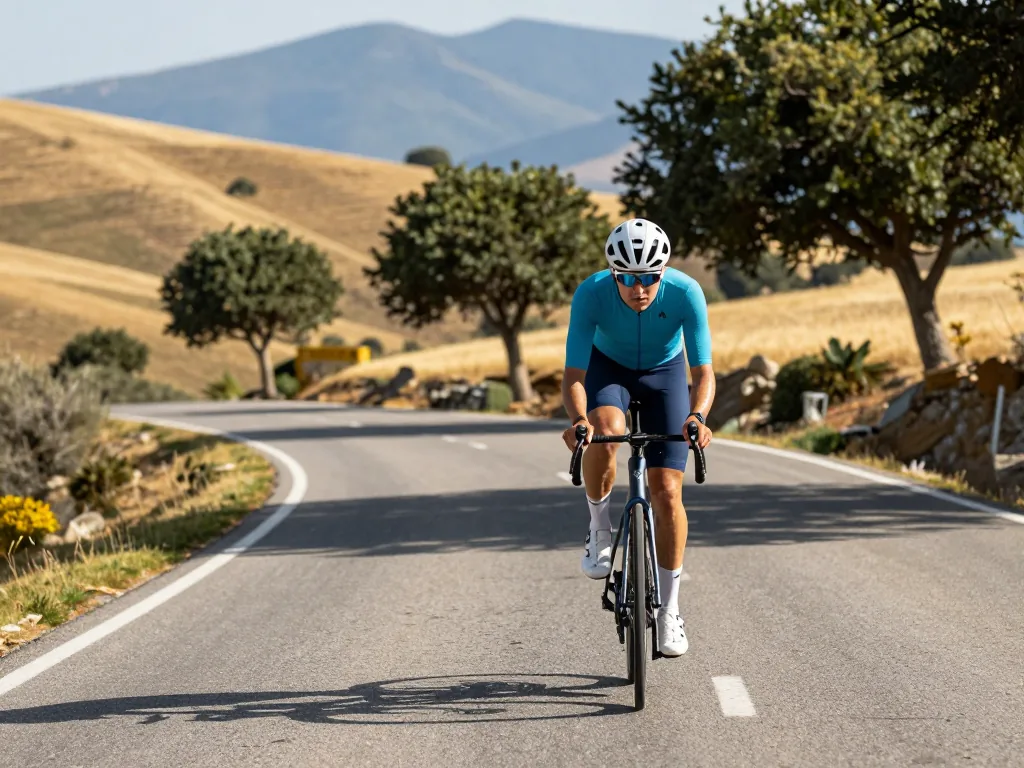
Imagine a week where every pedal stroke cuts through medieval stone villages, past volcanic craters, and along the shimmering Costa Brava. Welcome to Girona, Europe’s cycling mecca. This itinerary distills the region’s legendary terrain into seven action-packed days: over 1,000 climbs and 700 kilometers of tarmac, from lung-busting ascents to silky-smooth descents. Whether you’re chasing Strava segments on the famous Rocacorba or savoring café con leche in a sleepy hamlet, you’ll get turn-by-turn routes, elevation profiles, and insider tips on the best post-ride tapas. By the end, you’ll have a foolproof plan to conquer the Catalonian hills without missing a single epic viewpoint—or a single plate of jamón. Strap on your helmet; your strongest week on two wheels starts here.
Getting Ready and Getting There
Pre-Trip Bike and Body Preparation
Before you touch the tarmac, give your bike a full mechanical once-over. Rural Catalan roads are gloriously smooth in places, brutally abrasive in others. Check brake pads—replace them if less than 2mm remains—and chain wear with a quick-link checker; anything beyond 0.5% stretch means a new chain. Inspect tires for cuts, sidewall bulges, or embedded glass. Book a hard-shell bike box or padded case that fits your airline’s exact dimensions; many carriers enforce strict linear limits, and a soft bag can be a disaster if manhandled. Pack tools, two spare tubes, a mini-pump, and a multi-tool in your carry-on. Checked baggage sometimes goes missing; with the essentials on you, you can at least ride a borrowed bike if yours is delayed.
Don’t arrive with ambition alone. Build a solid base with 3–4 weeks of consistent riding—10–12 hours weekly—and include at least one long climb per week: 20–30 minutes at a steady, seated effort. Girona’s gradients are relentless but fair; they reward preparation and punish hubris. Show up with a 200km week under your belt, and you’ll be grovelling on day one. Put in 400km with climbing, and you’ll be smiling.
Arrival and First-Day Logistics
Fly into Barcelona El Prat (BCN) or Girona–Costa Brava (GRO). From BCN, take the Renfe train from Terminal 2 directly to Girona city center—roughly 1 hour 20 minutes, with dedicated bike storage if you book ahead. From GRO, it’s a 20-minute bus ride or a short taxi hop. The Girona train station is central, flat, and bike-friendly; you can wheel your boxed bike to most accommodations within 15 minutes.
Once your bike is assembled at the hotel, inflate tires to your usual pressure and do a short 30-minute spin on the flat riverside paths along the Onyar River. This isn’t sightseeing—it’s a systems check. Shift through every gear, test both brakes at moderate speed, and listen for creaks or rattles. Then walk the old town. The Cathedral steps and the colorful houses along the Onyar are your landmarks; getting lost here is charming but wastes precious riding time. Finally, locate a nearby bike shop—several sit within 500m of the Cathedral—and note its hours. Even if you need nothing, knowing where to find a mechanic, a spare cassette, or a CO2 cartridge before day two saves you from a mid-week meltdown.
Understanding Girona’s Cycling Terrain and Climate
The Three Main Terrain Types
Girona’s appeal lies in its remarkable variety, compressed into a small geographic area. You won’t spend a week pedaling one monotonous gradient. Instead, you’ll navigate three distinct personalities. The first is the flat, coastal ribbon: roads like the M-10 and the GI-682 along the Costa Brava offer fast, windswept kilometers with sea views, ideal for spinning out the legs or a recovery day. The second terrain type is the rolling interior of the Gavarres massif—a series of short, punchy climbs and technical descents that test your power and cornering confidence on narrow, tree-lined lanes. Finally, the region’s true challenge lies in the sustained mountain climbs of the Guilleries and the legendary Rocacorba. These are long, unrelenting ascents where gradients regularly exceed 10% and the road surface demands respect.
Across all three, expect narrow, winding rural roads with generally good asphalt. But don’t let your guard down. Gravel patches creep in at the edges, farm debris—mud, leaves, stray stones—is common after rain, and local drivers on descents are fast and familiar with every bend. Elevation profiles range dramatically, from sea level at Palamós to over 1,000 meters on Rocacorba’s summit. Plan your gearing accordingly. A compact crankset (50/34) matched with a 32 or 34-tooth cassette is the non-negotiable standard for enjoying, rather than surviving, these climbs.
Seasonal Weather and Best Months
The sweet spot for a Girona road cycling holiday is March through June and September through November. During these months, you’ll find mild, rideable temperatures (15–25°C), lower tourist numbers, and roads that are busy with locals but not overcrowded. July and August are hot and dry; riding is possible only with early morning starts (think 7 a.m. departures) and a strict hydration plan. Winters are cooler and wetter, with occasional rain and gusty winds that can make descents treacherous. Even in the best months, pack a waterproof jacket and arm warmers—the Guilleries microclimate can change from sunshine to cold drizzle in under an hour. A final rule for your week: check the local forecast 24 hours before every ride, and adjust your route accordingly. Mountain weather here is not a suggestion; it’s a daily variable you must respect.
Day One: Flat Coastal Spin and City Orientation
Route: Girona to Sant Feliu de Guíxols and Back
Today is about finding your rhythm, not testing your limits. Ride south from Girona on the GI-682, a road that unwinds from the city’s edge into rolling farmland before meeting the Mediterranean. The route is deceptively flat; the only real elevation comes as gentle rollers near the coast, perfect for spinning out travel stiffness. As you approach Sant Feliu de Guíxols, the sea appears on your right, and the road hugs the shoreline through quiet villages like Platja d’Aro and S’Agaró. The loop totals roughly 70–80 km with minimal climbing, but the ocean headwind can make the return leg deceptive. Stop in Sant Feliu for proper coffee at a harbor-front café, walk the promenade past old fishing boats, and resist lingering—the wind usually builds by midday. For the ride back, retrace the GI-682 or, if the breeze is stiff, take the slightly inland route via Santa Cristina d’Aro and Llagostera. This sheltered alternative adds a few kilometers but cuts wind exposure dramatically and reveals a different side of the Baix Empordà countryside. Use the day to fine-tune your bike fit: adjust saddle height, check cleat position, and note hot spots before the big climbs ahead.
Post-Ride Recovery and City Exploration
Back in Girona, lock the bike and walk. The old town is a labyrinth of narrow stone alleys, and walking is the best way to flush your legs. Climb the cobbled steps of the Jewish Quarter (El Call) and stand at the base of the Cathedral’s vast baroque façade—your calves will burn, but it’s a different burn than the bike delivers. Wander for an hour, stop for a cold drink in a shaded plaza, and let your body acclimate to the Catalan sun. For dinner, prioritize carbohydrates: pasta with local olive oil, a rice dish like arròs negre, or tapas with crusty bread. The coastal air is deceptively drying, so drink water steadily through the afternoon, not just at meals. Before bed, pull up tomorrow’s climb profile—whether it’s Rocacorba or Els Àngels—and mentally rehearse the gradients. Set your alarm for an early start; in Girona, the roads are quietest and the air coolest before 8 a.m. This evening is your last chance for a full night’s sleep before the serious elevation begins.
Day Two: The Iconic Rocacorba Climb
Route: Girona to Rocacorba Summit
Today, you earn your stripes. Leave the city center via the western edge, winding past the old stone walls and out onto the quiet GI-531. The first 10 kilometers are a gentle false flat—a deceptive prelude that lets your legs spin warm while the limestone massif of Rocacorba looms ahead. At Canet d’Adri, the road kicks upward without warning. This is where the climb truly begins: roughly 12 kilometers of relentless tarmac that averages 8–10%, with repeated ramps that punch past 15% in the tight switchbacks. The gradient never lets you settle; you’ll grind in the saddle, then stand on the pedals, then grind again. There’s no rhythm to find—only survival. As you gain elevation, the air thins and the views explode: to the east, the Mediterranean glints on the horizon; to the west, the jagged Pyrenees stretch into the haze. At the summit, a radio mast and a few wind-scoured rocks greet you. There is no café, no water fountain, no shade. Bring everything you need—two full bottles, a couple of bars, and a jacket for the descent. The drop back down is exhilarating but dangerous: the asphalt is smooth, but the corners are blind and frequently damp from mountain runoff. Local drivers know the road intimately and take it fast. Use the full width of your lane, brake early, and never cross the centerline.
Alternative Options and Safety Notes
If the full Rocacorba feels like too much, you have options. Ride the lower slopes to the village of Sant Martí de Llémena—about 6 kilometers of steady climbing—then turn around and roll back. That gives you the flavor without the full punishment. For a medium-intensity day, skip Rocacorba entirely and loop through the Gavarres hills to the southeast: rolling, forested roads with short punchy climbs and far less traffic. Whatever you choose, carry a repair kit. There are zero services on the mountain; a flat tire here means a long, hot walk down. Before descending, squeeze your brake levers and check for any sponginess—a full stop at the base for a second bottle is worth the time. This is a day for respect, not heroics.
Day Three: Els Angels and the Gavarres Massif
Route: Girona to Els Angels Monastery
Today’s ride is a study in contrasts: a long, steady pilgrimage to a mountain sanctuary, then a playful, rolling loop through one of Catalonia’s most underrated hill ranges. Leave Girona early, heading south on the C-65 towards Llagostera. After roughly 12 km of flat, fast spinning, you’ll spot the turn for the GI-664—and the real work begins. The road to Els Angels Monastery is a classic 8 km climb, never brutally steep but relentlessly consistent, holding between 6% and 8%. The first half is exposed; as you gain altitude, the forest canopy closes in, offering dappled shade and the cool, earthy scent of pine and cork oak. Keep your rhythm smooth and your breathing controlled—there’s no need to attack this one.
The summit rewards you with a wide esplanade, a café, and a terrace hanging over the plains, the Mediterranean glinting on the horizon. Stop for lunch: pa amb tomàquet with jamón, a strong cortado, and twenty minutes of pure, silent view. Refuelled, you face a fast, technical descent with a couple of switchbacks that demand attention. Instead of retracing your route, turn into the Gavarres Massif. Here, tarmac narrows to ribbons of quiet lane, rolling over short, punchy hills. You’ll climb, descend, and climb again for the next 40 km, passing stone farmhouses and cork forests, with occasional sea glimpses at Sant Feliu de Guíxols. The full loop returns you to Girona via Cassà de la Selva, totalling 90–100 km.
Training Focus and Pacing
Think of today as a threshold workout disguised as a sightseeing tour. On Els Angels, ride at a steady tempo—just below your lactate threshold, where you can still manage short sentences but you’re definitely working. This builds sustained power. Once you hit the Gavarres rollers, shift focus. These short, sharp rises (some at 10% for under 500 metres) are perfect for explosive, punchy efforts: accelerate over the crest, then recover on the descent. Keep your cadence high, around 90–95 rpm, on all climbs to protect your knees and avoid grinding. On descents, tuck into a low, aerodynamic position to rest your legs while maintaining speed. The route also suits a semi-guided group: multiple bail-out points let you cut back to Girona via the C-65 if legs or time run short, making it a safe yet challenging day in the saddle.
Day Four: Rest Day or Active Recovery
By the fourth day, your legs have absorbed nearly 400 kilometers of Catalan asphalt, rolling hills, and the occasional steep ramp out of the saddle. The body needs a strategic pause—not necessarily a full stop, but a deliberate shift in load. This is the day that separates a strong week from a broken one.
Option One: Full Rest in the City
If your legs feel heavy, your sleep has been shallow, or the thought of clipping in makes you wince, take the complete day off the bike. Girona’s old town rewards the curious pedestrian. Start at the Cathedral, whose 90-step baroque facade is a workout in itself—but a gentle one. The Arab Baths, tucked just behind the cathedral, offer a cool, stone-vaulted respite that feels centuries away from carbon frames and power meters. For something entirely different, the Museum of Cinema, housed in a former water tower, traces the pre-film era with optical toys and early projectors; it’s a quirky, low-effort distraction that keeps you on your feet without taxing your quads.
Use this downtime for bike maintenance that you’ve been postponing. Wash your cycling kit in the sink with warm water and mild soap—sweat salts degrade fabrics quickly. Lube your chain with a wet lubricant, wiping off the excess, and check your tire pressure; aim for 90–100 psi on 25mm tires, depending on your weight and the forecast. A 20-minute walk after each meal—down to the Onyar River or through the narrow alleys of the Jewish Quarter—keeps blood flowing to your legs without adding fatigue. This is not laziness; it’s physiological investment in the three riding days ahead.
Option Two: Easy Flat Ride to Banyoles Lake
For those who feel restless, choose active recovery. Ride the flat, mostly car-free path along the Ter River heading northwest toward Banyoles Lake—approximately 25 kilometers one way. The route is pancake-flat, smooth, and shaded by plane trees for long stretches. Once you reach the lake, circle it on the well-maintained perimeter path, a 12-kilometer loop with only the gentlest of rollers. This is not the day to chase Strava segments. Keep your heart rate in Zone 1 or low Zone 2, spin a small gear at 90+ rpm, and let conversation or audiobooks fill the time. Pack a light picnic—a baguette, some local cheese, and a piece of fruit—and stop at one of the wooden benches facing the water. The goal is to flush out metabolic waste and re-establish range of motion in your hips and knees, not to add training stress. If you feel any sharp pain, turn around immediately; there is no shame in cutting this short. Return to Girona by the same flat path, and finish your day with a gentle stretch session and a warm shower. You will wake up on Day Five with fresh legs, eager for the climbs that await in the Gavarres and beyond.
Day Five: Coastal Challenge to Palamós and the M-10 Flat Route
Route: Girona to Palamós via the Coastal Flat
Today, speed replaces climbing. Ride east out of Girona on the GI-682, which quickly sheds the urban fringe and becomes a smooth, undulating ribbon along the Costa Brava’s rocky edge. The first 15 kilometres through Sant Julià de Ramis serve as a gentle warm-up, but past the airport, as the landscape opens toward the sea, the real fun starts. The M-10—the local name for the flat, fast stretch between Celrà and Palamós—draws WorldTour pros wintering in Girona. The reason is clear: immaculate tarmac, a nearly pancake-flat profile, and the Mediterranean glittering on your right for almost the entire 60–70 km. No lung-busting ramps here, just a relentless, rhythmic cadence that holds 35–40 km/h with ease. Your only adversary is the wind. Coastal crosswinds can whip across exposed sections, so stay alert, grip the bars tightly, and ride slightly echeloned in a group. Plan a mid-morning arrival in Palamós, where harbourside restaurants serve grilled squid, fresh anchovies, and paella. A seafood lunch is non-negotiable—expect €18 to €30 per person for a generous main and a drink. Refill both bottles at the public fountain near the port before deciding what’s next.
Return Options and Wind Management
Two solid choices get you back to Girona. The simplest: retrace the M-10 exactly as you came—fast, flat, familiar. But if your legs feel fresh, add a 25 km loop through the Gavarres hills north of Palamós. That adds roughly 600 metres of climbing on narrow, quiet lanes through cork-oak forests—a sharp contrast to the coastal straightness. It’s a smart compromise for vertical without another full mountain day. Wind management is critical. Morning sea breezes are light, but by early afternoon a strong onshore headwind often builds, turning the return into a slog. So leave Girona by 8:30 am, reach Palamós by 11:00, eat quickly, and be back on the bike by 12:30. If you’re cooked, skip the ride back entirely—the Renfe regional train from Palamós to Girona runs several times daily and takes about an hour. Bikes are allowed in the designated carriage, but you must secure yours with a strap or bungee in the marked area. Check the timetable the night before, as Sunday services are sparse. Fares run €6 to €9 per bike and rider. Either way, you’ll roll into Girona by late afternoon—salty, satisfied, and ready for tomorrow’s rest day.
Day Six: The Guilleries Massif and Longer Climbing
Route: Girona to Osor and the Guilleries Loop
Today, the short, explosive climbs of the coast give way to a sustained mountain test. Head west out of Girona on flat, fast roads toward Anglès, spinning freely for the first 25 kilometres. Just past Anglès, turn onto the GI-543, and the ride’s character shifts instantly. The road narrows, tarmac darkens under pine shadow, and the gradient kicks up as you enter the Guilleries massif. This is a proper mountain climb—roughly 12 kilometres to the Coll de Revell, averaging 5–7% with steeper ramps that force you out of the saddle. Unlike Rocacorba or Els Angels, there are no crowds, no Strava fanfare, no café at the top. Just dense oak and beech forest, the smell of damp earth, and an eerie, welcome silence. The summit is a simple gap in the ridge, with no services whatsoever—so carry every litre of water and every calorie you’ll need in your jersey pockets. The descent to Osor is technical but rewarding, with switchbacks that tighten as you drop into the valley. From Osor, the route flattens completely, and you roll back toward Girona on quiet valley lanes, covering 110–130 km depending on how many extra loops you add around the reservoir.
Endurance and Nutrition Strategy
This is your longest, most demanding day, and it calls for a different kind of discipline. Start with a substantial breakfast—porridge, eggs, and a strong coffee—at least two hours before you roll out. Once on the bike, set a timer: eat every 45–60 minutes, alternating between solid food (bananas, rice cakes, or a ham sandwich) and quick-energy bars or gels. Don’t wait for hunger; by then, your glycogen stores are already compromised. On the climb, pace at a conversational effort—if you can’t string together a sentence, you’re going too hard. Save your real pushing for the final 20 kilometres of rolling terrain back to Girona, where a tailwind often helps you finish strong. Hydration is equally critical: the forest humidity can be deceptively heavy, leaving you soaked even on a mild day, so add electrolyte tablets to both bottles and refill at the fountain in Osor before the valley run home. Manage this day correctly, and you’ll arrive back in Girona tired but not destroyed—with just one day left to enjoy the rewards.
Day Seven: Final Short Ride and Departure Logistics
Route: Girona’s Riverside and Local Hills
Your last morning in Girona should feel like a gentle exhale. Set out after a proper breakfast—no alarms, no rush—and head straight for the flat, car-free paths that trace the Onyar and Ter rivers. These smooth ribbons of tarmac are perfect for spinning out the legs, letting the rhythm of the past six days settle into memory. Follow the Ter eastward past Devesa Park, where plane trees form a cathedral of shade, then loop back toward the city center. Once you’re feeling loose, add the short but satisfying climb up the Sant Daniel valley—a quiet road curling through forested slopes before opening onto a final view of Girona’s red-tiled rooftops, the cathedral rising above the old town. Pause there, take a photo, and let the moment linger. This ride is about savoring, not suffering. Keep it social, keep it easy, and aim to be back at your accommodation by noon. Total distance: 40–50 km with under 400 meters of elevation gain. You’ll arrive with a light sweat and a full heart.
Packing and Travel Tips
Once you’re back, resist the urge to rush. Lay out your bike tools, a clean rag, and your travel case or box on a flat surface. Disassemble your bike carefully, in this order: remove the pedals, loosen the handlebar stem, drop the saddle, and release the front wheel. If you’re using a hard case, wrap the frame in foam or bubble wrap, securing the rear derailleur with a spacer to protect it from impact. Deflate tires to about half pressure to prevent blowouts during flight pressurization. Pack your helmet, shoes, and pedals in your carry-on if possible—this keeps your most essential gear safe and reduces checked baggage weight. For transport to Barcelona–El Prat or Girona–Costa Brava airport, book a taxi van or shuttle in advance (from €60 to €90 per transfer to Girona airport, or €120 to €180 to Barcelona). If driving, allow 90 minutes to Barcelona. Finally, double-check your bike case dimensions against airline policy; most accept oversize luggage for a fee of €40–€80 per flight. With your bike safely packed and your legs pleasantly tired, you’ll leave Girona with the quiet satisfaction of a week well spent—and the certainty that you’ll be back.
Frequently asked questions
When is the best time of year for a one-week road cycling holiday in Girona?
Spring (April–June) and autumn (September–October) offer the most stable weather, with mild temperatures and fewer rainy days. Summer can be very hot, especially inland, while winter days are short and chilly, though often sunny.
What kind of terrain can I expect on a typical week of riding around Girona?
You’ll find a mix of rolling hills, steep climbs (like Rocacorba and Els Angels), and flatter coastal routes. Most rides start from the city and head into the Gavarres or Rocacorba massifs, with options for longer mountain passes further west.
Do I need to bring my own bike, or can I rent one locally?
Both are common; many riders bring their own bike in a travel case, but Girona has several reputable rental shops offering road bikes with proper gearing for climbs. If you rent, book in advance for a week to ensure availability and a proper fit.
How should I structure a week of riding to avoid burnout?
Plan 5–6 riding days with one rest day, and alternate hard climbing days with easier recovery rides. For example, do a big climb day early, a flat coastal spin in the middle, and a shorter hilly loop before your final long ride.
What are the must-ride climbs or routes for a first-time visitor?
Rocacorba is the iconic climb, but Els Angels and the loop around Lake Banyoles are also essential. For a longer day, ride to the coast at Palamós or Sant Feliu de Guíxols, then return via the inland roads.
Are there any specific road safety or etiquette rules I should know?
Ride single file on narrow roads, especially on descents, and be aware that drivers are generally respectful but may pass closely. Always carry a phone and ID, and use lights on the main roads near the city, as some tunnels and early morning rides are dark.
What should I pack for a week of cycling in Girona, beyond the obvious kit?
Bring layers for temperature swings (a lightweight windproof jacket and arm warmers), plus sun protection and a small repair kit with spare tubes and a pump. A hydration pack or large bottles are useful on long climbs, as water fountains are sparse on remote roads.
Can I combine cycling with sightseeing or cultural activities in Girona?
Yes, the city itself has a well-preserved old town, Jewish quarter, and cathedral, and you can easily add a morning or afternoon off the bike. On rest days, visit the coastal towns like Cadaqués or the Dali Museum in Figueres, both within a short drive.
How do I handle navigation, given many roads are quiet and unmarked?
Download GPX routes from local cycling clubs or use a cycling computer with maps, as cell signal can drop in valleys. Paper maps are still useful, and you can also ask at local bike shops for recommended routes, as they often share printed cue sheets.
What are the typical food and hydration options during a ride?
You’ll pass small villages with bars and bakeries where you can stop for coffee, pastries, or a quick sandwich. For longer rides, carry at least two large bottles and refill at public fountains in town squares, but don’t rely on them on remote climbs.